How to Say No in Japanese Politely (You Rarely Say “No”)
Published 2026-07-29 · Updated 2026-09-03
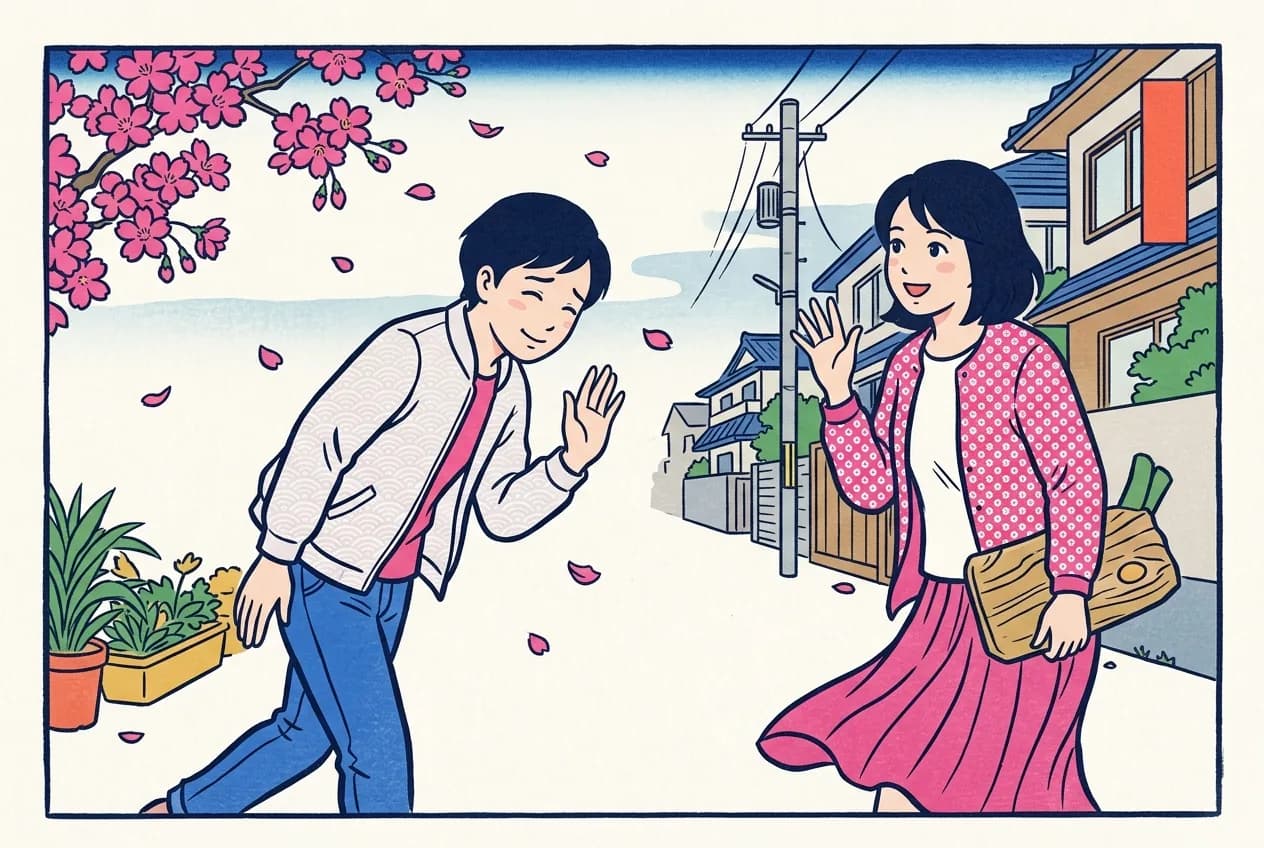
The real Japanese “no” is a sentence that stops halfway: ちょっと (chotto)… — literally “a little…” — followed by nothing. That unfinished trailing-off is a complete, polite, universally understood refusal.
Start with a refusal that never says no:
すみません、その日は用事があってすみません、そのひはようじがあって (sumimasen,sonohihayoujigaatte)
Sorry, I have plans that day…
Use this shape for any invitation you cannot accept, and let the sentence stop before the refusal itself. Do not use it to decline an offer: a bag or a refill takes 大丈夫です (daijoubudesu).
Meanwhile the word your textbook gave you, いいえ (iie), is almost never used to decline people. It corrects facts (“No, that's not my umbrella”), not invitations. Declining a person with a flat いいえ (iie)、行きません (ikimasen) sounds startlingly blunt, and standard Japanese teaching materials specifically tell you not to do it.
Why the sentence stops halfway
Japanese conversation puts enormous value on letting both sides keep face. A direct refusal hands the other person a rejection with nothing to soften it. An unfinished 今日はちょっと (kyouhachotto)… lets them complete the ending in their own head.
You never said no, and they understood anyway. The refusal was made by the two of you together.
This is why finishing the sentence is not only unnecessary but counterproductive. The silence after ちょっと (chotto) is the polite part.
The five refusals that cover everything
Here are the five templates, with their literal meanings and what they actually do:
| Phrase | Literally | Actually means |
|---|---|---|
| ちょっと (chotto)… | Literally“a little…” | Actually meansNo (universal, gentle) |
| すみません (sumimasen)、(reason)で (de)… | Literally“sorry, because of (reason)…” | Actually meansNo, with a face-saving excuse |
| 考えておきます (kangaeteokimasu) | Literally“I'll think about it” | Actually meansVery probably no |
| また今度 (matakondo) | Literally“maybe next time” | Actually meansNo for now — warmth intact |
| 大丈夫です (daijoubudesu) | Literally“I'm fine” | Actually meansNo thank you (to offers) |
大丈夫です (daijoubudesu) — the modern all-rounder
Offered a bag at the konbini? A refill? A flyer on the street?
大丈夫です (daijoubudesu) — literally “I'm fine” — declines all of it smoothly. The usage grew popular relatively recently, and older textbooks miss it entirely. That is why it feels like insider knowledge the first time you use it.
The politer 結構です (kekkoudesu) also means “no thank you,” but it sounds firmer and cooler. Useful for persistent salespeople, less so for friends.
Hearing the no that nobody says
The same system runs in reverse: when a Japanese friend says 考えておきます (kangaeteokimasu) or 行けたら行く (iketaraiku) (“I'll come if I can”), the statistical answer is no. This isn't dishonesty — both sides usually know, and the softness is the courtesy itself.
Learning to receive these gracefully, with わかりました (wakarimashita)、また今度 (matakondo), is as much a language skill as producing them.
Key takeaways
Use いいえ (iie) to correct a fact, not to refuse an invitation.
Decline an offer with 大丈夫です (daijoubudesu), and decline an invitation with ちょっと (chotto)… or また今度 (matakondo).
Read 考えておきます (kangaeteokimasu) and 行けたら行く (iketaraiku) from other people as a probable no.
So when is いいえ (iie) correct?
Two places, and both are narrow. Correcting facts: “Is this yours?” — いいえ、違います (iie,chigaimasu).
The second is deflecting praise. Complimented on your Japanese, you answer with いえいえ (ieie)、まだまだです (madamadadesu), meaning “oh no, I've still got a long way to go.”
It is the expected humble response, and instantly endearing.
Try it under pressure
Knowing the templates is step one. Producing ちょっと (chotto)… with a natural apologetic smile, while your brain still wants a hard “no,” takes practice.
That is what the conversation scenarios are for, and the target is a sentence you never have to finish.