Field Notes — Real-World Japanese
Notes on the Japanese you actually meet — anime language, casual speech and culture, from the team behind Ukiyoe Japanese.
Ne and Yo in Japanese: Who Already Knows It
Ne and yo go on the end of a Japanese sentence and mark who already knows what it says. Here is the test, what yone adds, and when ne does not fit.
Japanese Greetings: Pick by Time of Day and Who You Face
In Japanese the greeting is decided before you pick it: the moment chooses the word, and the person standing in front of you sets how polite that word is.
Japanese Particles: Ask What the Word Is Doing
Japanese particles are not a list to memorize. Ask what the word is doing in the sentence, and one particle is already the right one for the job.
Is Japanese Hard to Learn? What Is Hard, and What Is Not
Japanese difficulty is not one thing. It comes in three parts, and two of them are finite work you can finish. Here is what each part asks of you.
Japanese Phrases by Scene: What to Say Where, Not a List
Japanese phrases stay with you when they come by scene, not as a long list. Here are the scenes you will meet, and the one sentence that opens each.
Family in Japanese: Two Sets of Words for the Same People
In Japanese the word for your own mother is not the word for someone else's. Here is the test that picks the right family word, with every pair.
Arimasu vs. Imasu: The Test Is Not Whether It Is Alive
In Japanese, arimasu and imasu split by what moves under its own power, not by what is alive. Here is the test that decides it, and the negative forms.
This and That in Japanese: Whose Space the Thing Is In
Japanese picks between this and that by whose space the thing is in, not by distance. Here is the test that decides it, and what changes before a noun.
How to Say What in Japanese: One Ending, Nothing Moves
Japanese asks a question without moving a word. The question word stands where the answer will stand, and one ending does the rest. Here is how to pick it.
How to Say And in Japanese: Four Joins, One Question
English has one word for and. Japanese picks the join from what you are joining: nouns, adjectives, verbs, sentences. One says your list is finished.
Japanese Adverbs: Three Sources, One Slot, Two That Lock
Japanese adverbs come from three places and all sit in one. A few of them decide, before the verb even arrives, whether your sentence has to end negative.
If in Japanese: Four Forms, Two Questions, One Safe Answer
Four Japanese forms all translate as if. Each claims something different about the condition. Two questions pick the right one; one is almost always safe.
Japanese Volitional Form: One Verb, Five Ways to Push
The volitional form says let's. Change the tail and the same verb asks, orders, or shoves. Here is how far each ending pushes, and who it pushes.
Japanese Potential Form: One Ending, Three Jobs, Two Doers
The potential form says you can. The same rareru also says it happened to you, and politely that they did it. Here is the test that tells the three apart.
Japanese Adjectives: Two Types, Four Forms, One Small Word
Japanese adjectives come in two types with four forms each. One bends itself, the other leans on desu. Here is the whole map and the test that sorts them.
Japanese Verb Conjugation: Five Steps, One Step, One Chart
Japanese verb conjugation: three verb groups, two tenses, two irregular verbs. One verb has eight basic forms. Here is the whole chart, and where it stops.
Days of the Week in Japanese: Seven Planets, Then the Dates
Days of the week in Japanese name the same seven lights English does: sun, moon and five planets. Plus dates, months, time and the readings you cannot guess.
Japanese Sentence Structure: One Fixed Rule, Then Name Tags
Japanese sentence structure: the verb comes last, and its ending decides past, negative, or question. Particles tag each word's job, so the rest can move.
What Ganbatte Really Means (and When to Say Something Else)
Ganbatte isn't “good luck” — it's a hand on your back. What it means, ganbatte vs ganbare, how to reply, and what to say instead when it doesn't fit.
Learn Katakana: The Full 46-Character Chart + 4 Common Traps
Katakana is the same 46 sounds as hiragana in sharper clothes. The full chart, shi vs tsu, the long vowel mark, and the four rules that let you read new loanwords.
Japanese Writing System: 3 Scripts, Which to Learn First
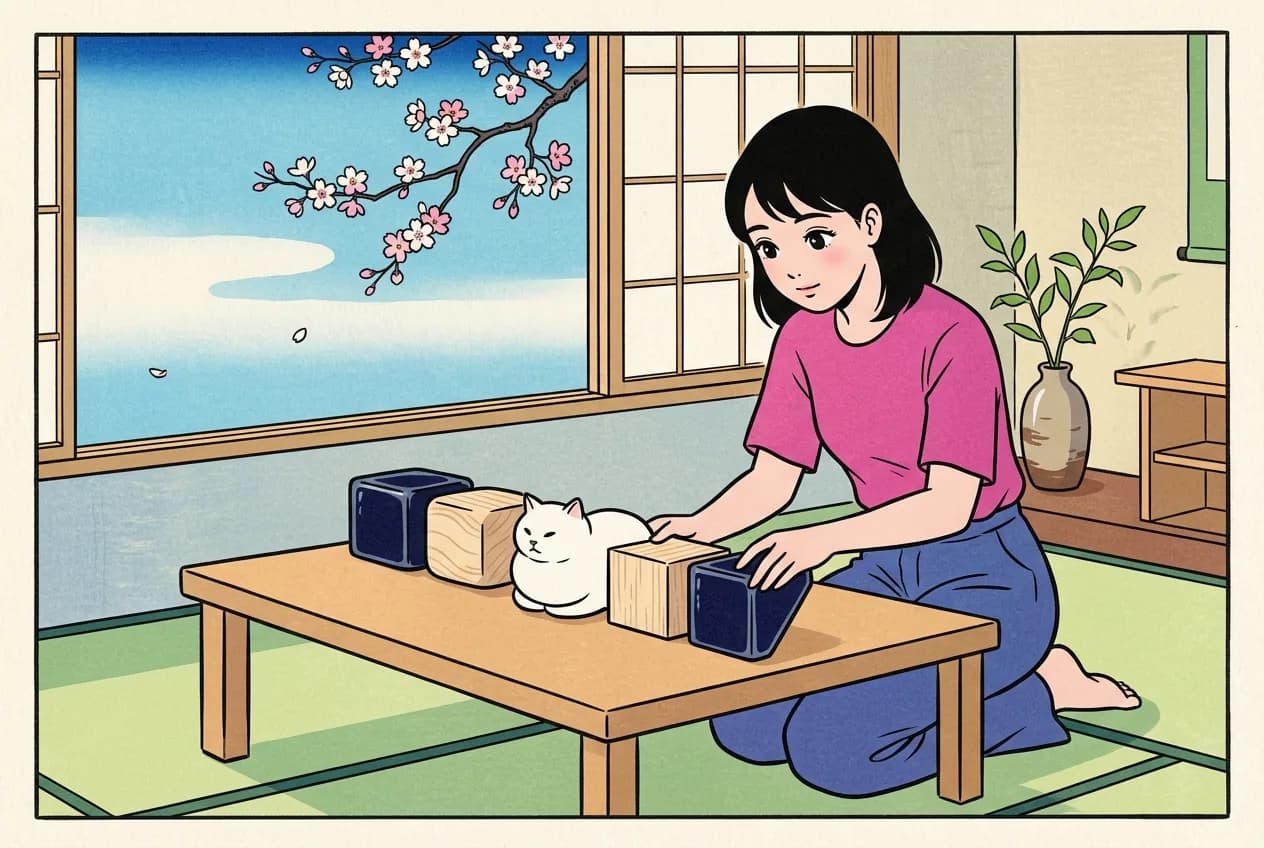
Japanese has no alphabet — it has two syllabaries and kanji. Watch all three split one sentence, see why that replaces spaces, and learn them in order.
How Long Does It Take to Learn Japanese? Real Ranges by Goal
It depends on what “learn” means. What the U.S. FSI's 2,200 hours really measure, what the JLPT doesn't say, and honest ranges by goal and daily minutes.
Japanese Numbers: Count to 10,000, Plus the First 5 Counters
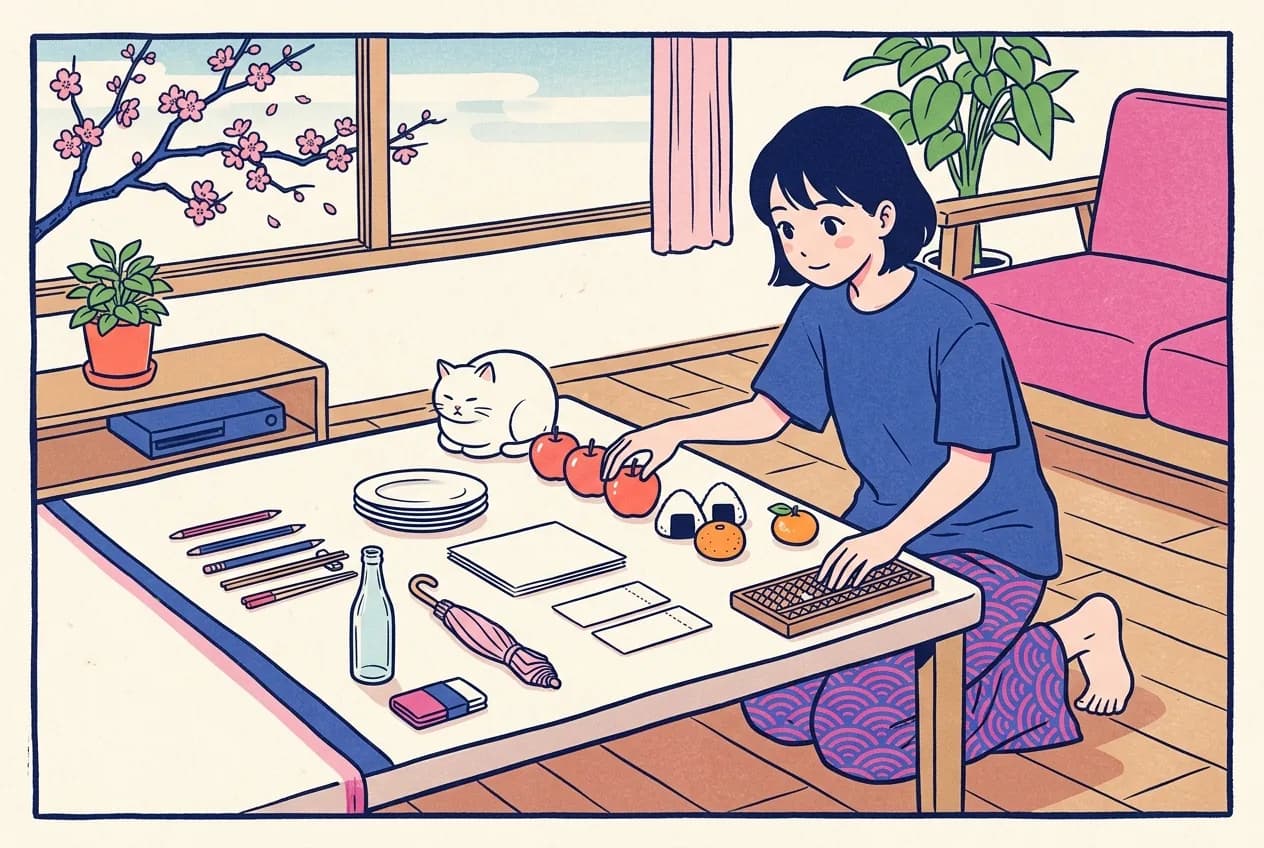
Japanese numbers in the order you need them: 1–10, why 4/7/9 have two readings, ten-thousand grouping, hitotsu/futatsu, five counters, four sound changes.
Japanese Honorifics: -San, -Kun, -Chan, -Sama, or Nothing
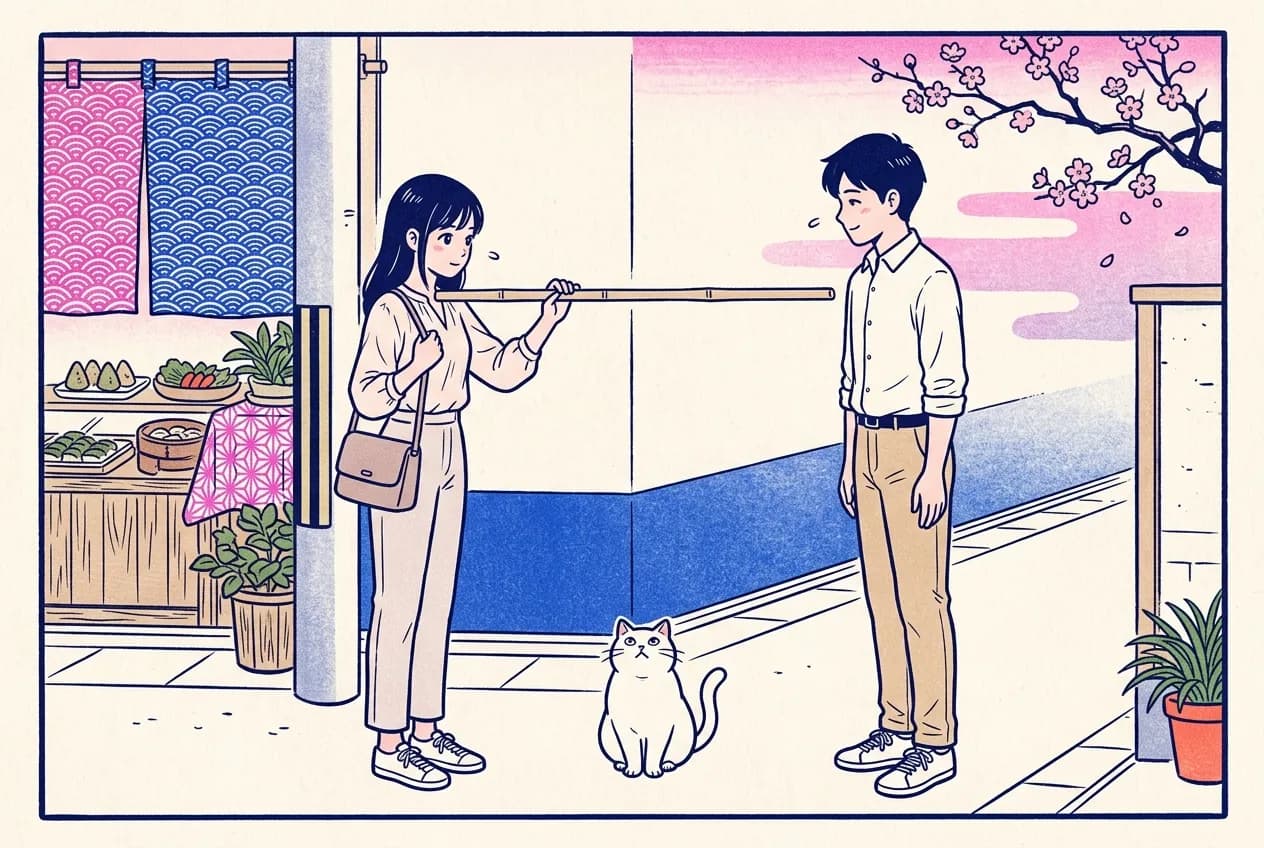
Japanese honorifics: name plus san stands where another language would say you. Who gets kun, chan, sama or a title, and when Japanese drops the suffix.
Best Apps to Learn Japanese in 2026, by What You Need
No single app does the whole job. Which apps are known for vocabulary, kanji, grammar, speaking, and reading — and what running a full stack really costs.
Where Do Visitors to Japan Really Go? 2025 Prefecture Data
Japan's record 42.7 million visitors in 2025, mapped: official data on the 10 most-visited prefectures, the Chiba surprise, and the 37 almost everyone misses.
Which Anime Genre Should You Learn Japanese From? We Counted
We counted the vocabulary in 68,779 lines of subtitle dialogue across six genres. Some feed you real-life Japanese; some teach you to address a Demon King. The honest comparison.
Class, Classroom, Student Council: 10 Words of School Anime
Jugyou, kyoushitsu, bukatsu — we counted 4,249 lines of school-life dialogue. The friendliest genre for beginners: its vocabulary is where anime and textbooks finally agree.
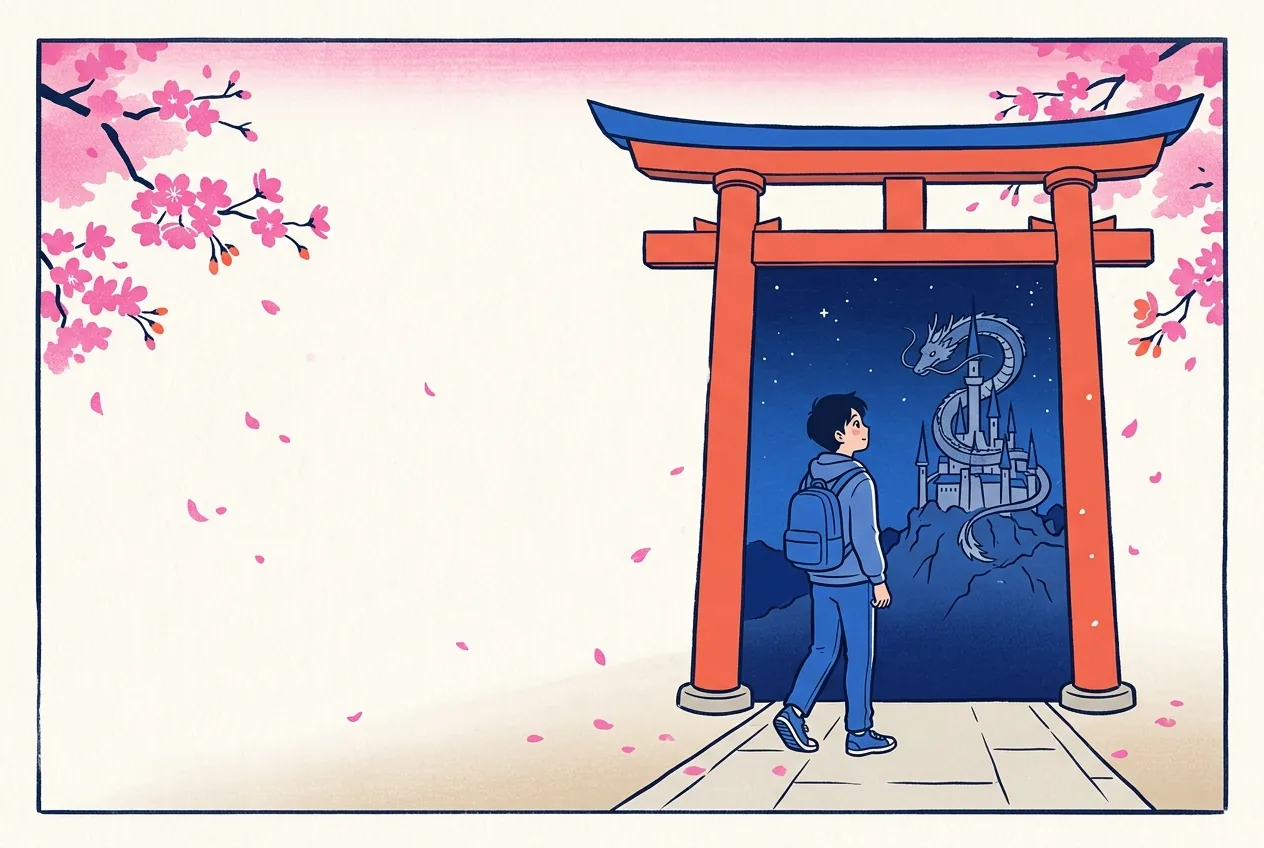
Magic, Dragons, Demon Kings: the Words Every Isekai Runs On
Mahou, doragon, maou — we counted 6,365 lines of fantasy and isekai dialogue. Here are the genre's 10 defining words, with an honest note on which ones you will never use at the bank.
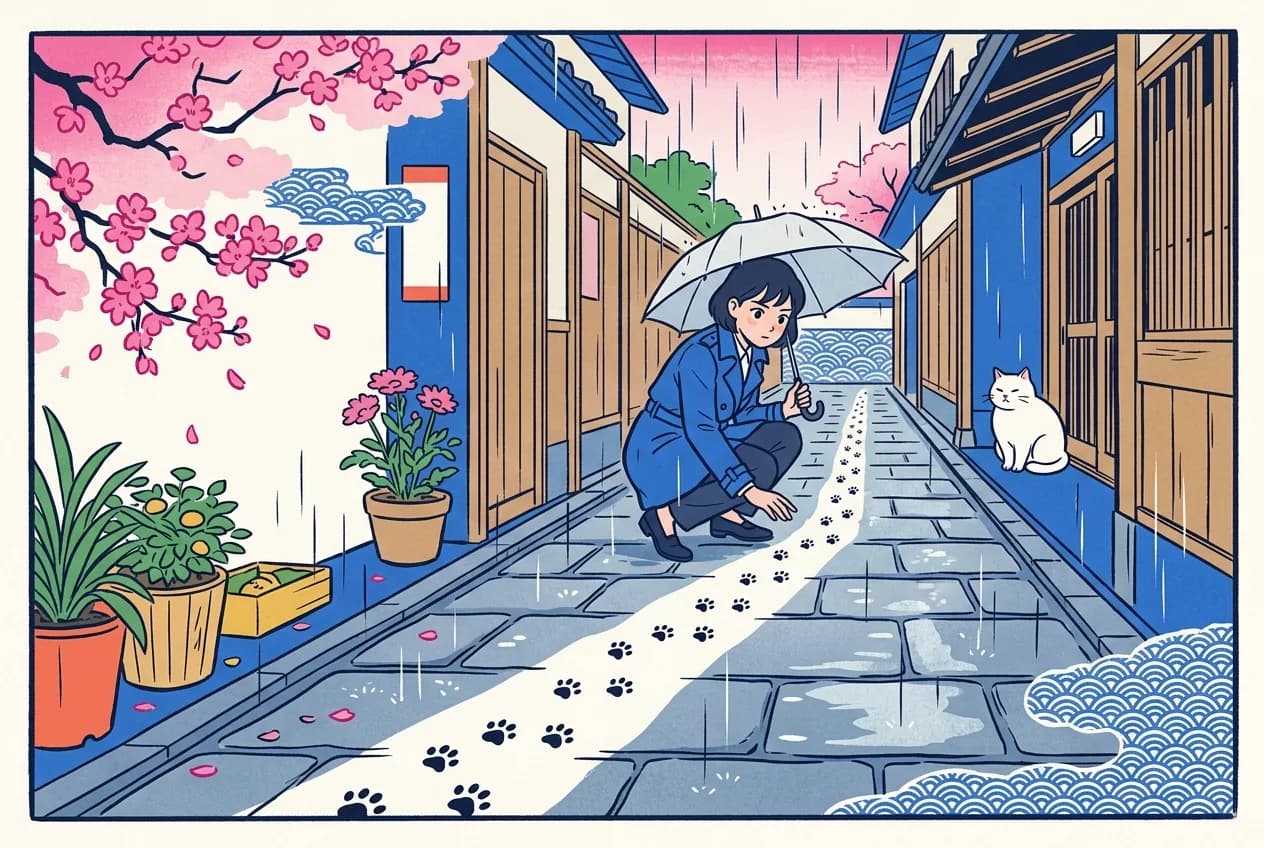
Japanese Crime Drama: the 10 Words Behind Every Episode
Jiken, sousa, hannin — we counted 34,585 lines of crime and mystery dialogue, the biggest genre in our corpus. Here are the 10 words every case runs on.
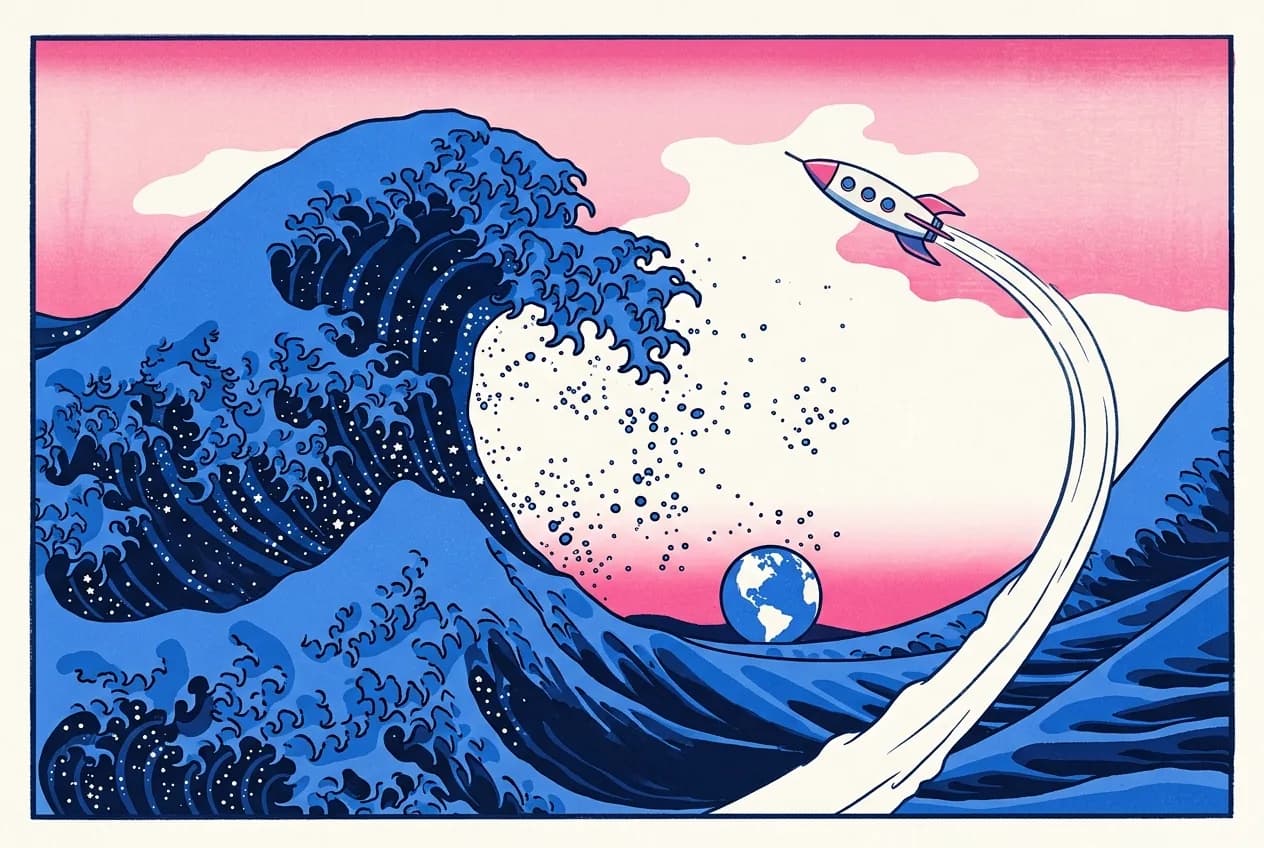
Earth, Space, Robot: the Words Sci-Fi Anime Actually Uses
Chikyuu, uchuu, robotto — we counted 10,184 lines of sci-fi dialogue. The genre's most frequent words are real science vocabulary you can reuse far beyond the bridge.
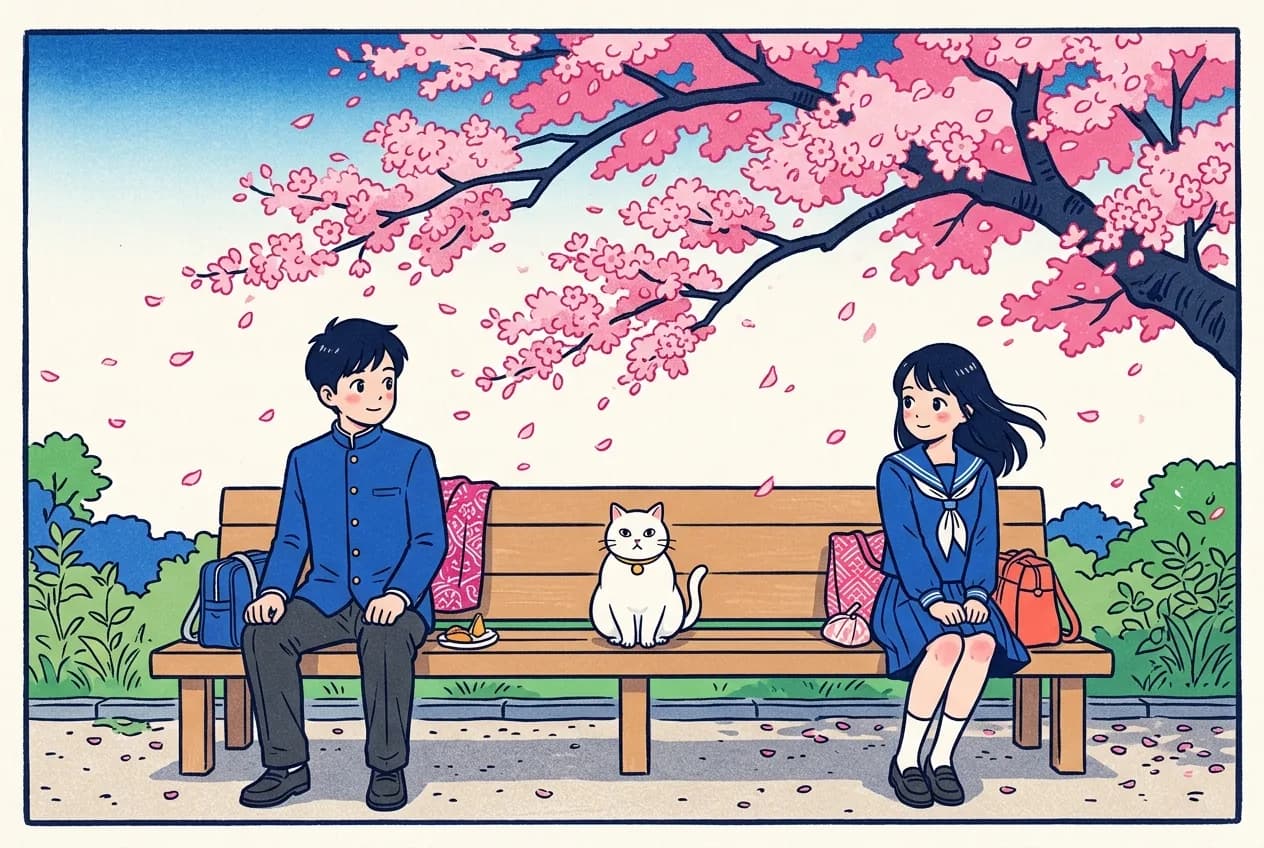
Every Romance Anime Uses These 10 Japanese Words (Ranked)
The 10 Japanese words every romance anime uses — aisuru, deeto, kareshi, kokuhaku, hatsukoi and more — ranked by real frequency across 5,753 lines of dialogue, with what each means and which you can say in real life.
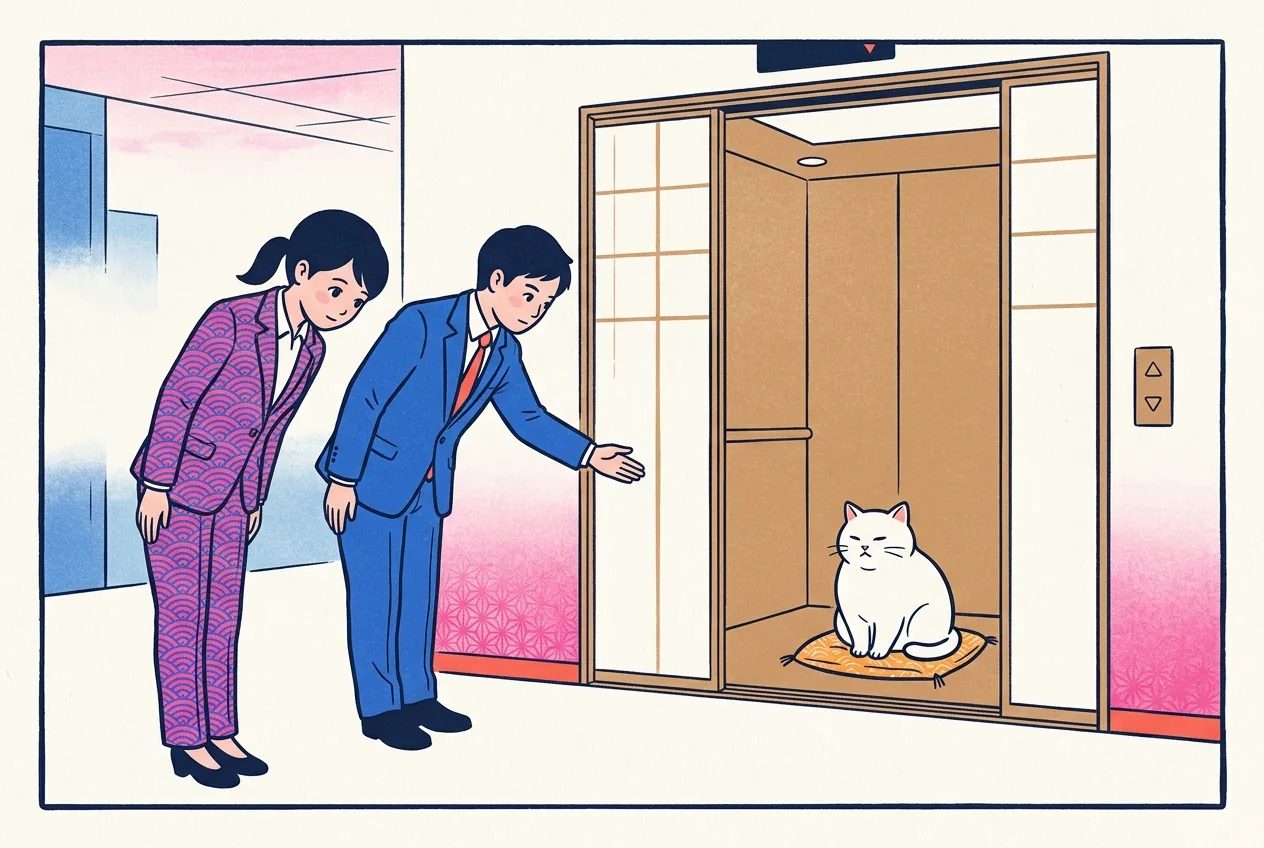
The 10 Words Every Japanese Office Drama Runs On
Buka, joushi, haken — Japanese office dramas run on words JLPT vocabulary lists file under N1, the top level. We counted 7,643 lines of workplace dialogue; here is the top 10, ranked by real frequency.
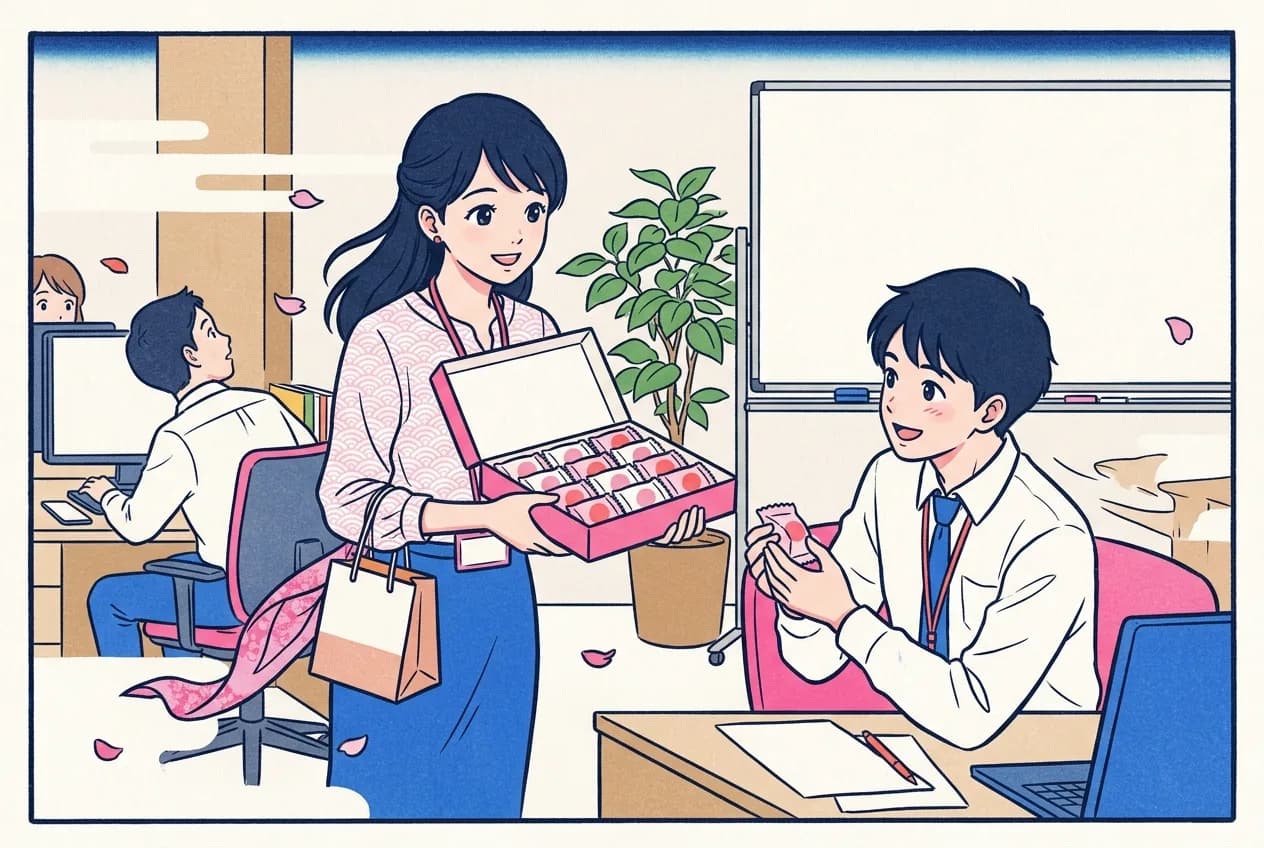
Omiyage Explained: How Japan's Souvenir Gift Culture Works
Omiyage aren't souvenirs you keep — they're regional sweets carried home to share, one wrapped piece per coworker. The unwritten rules of Japan's gift culture.
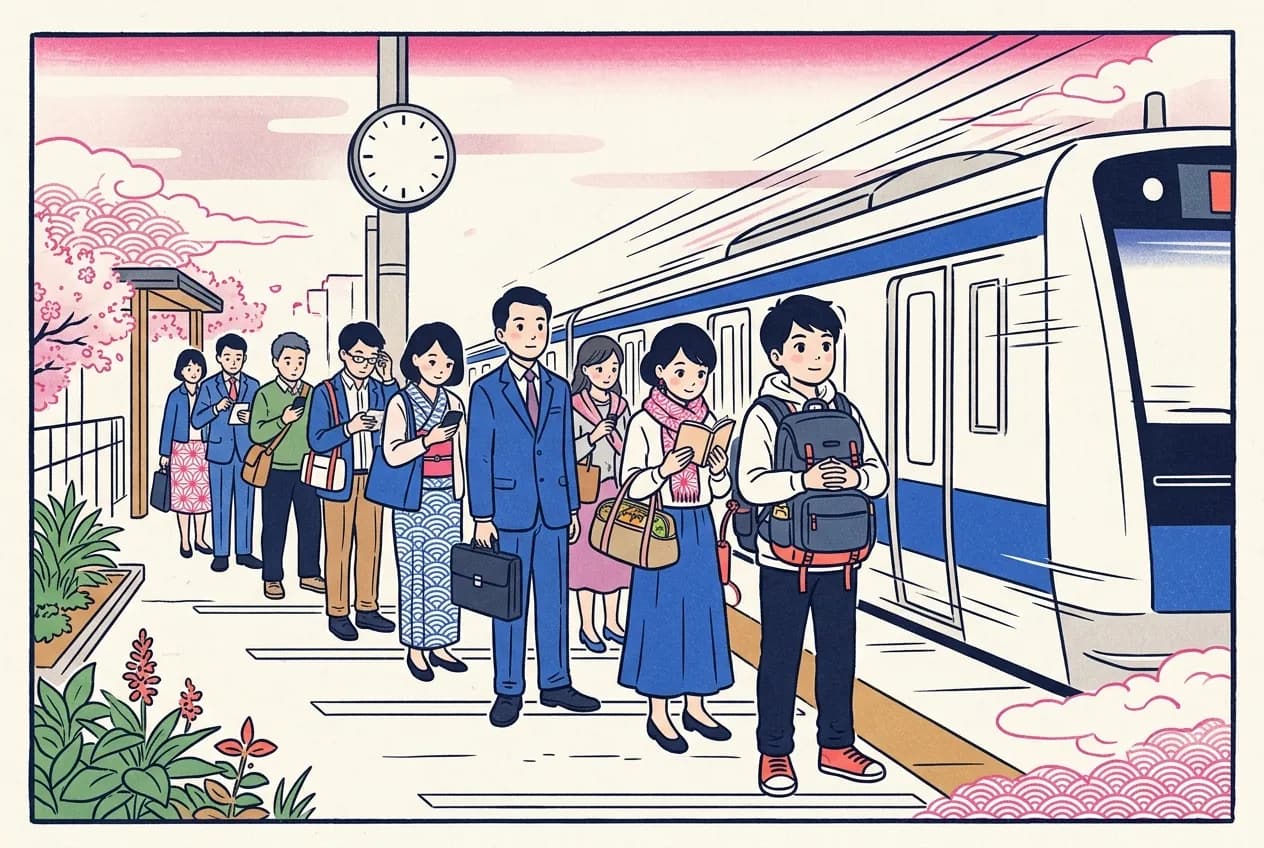
Japanese Train Etiquette: The 3 Rules That Actually Matter
No calls, priority seats, backpacks on the front — Japanese train etiquette is three rules and one idea. Here's the logic behind the quiet car.
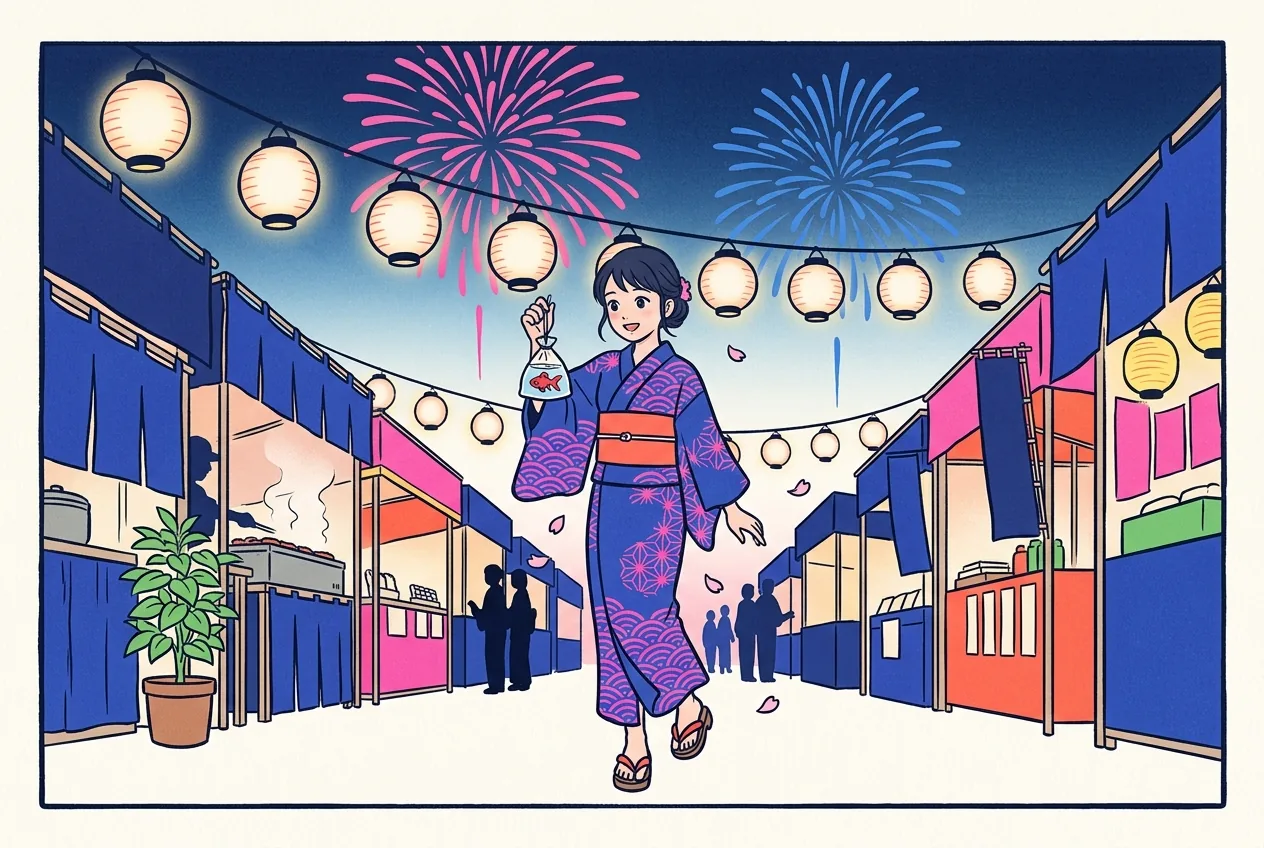
Japanese Festivals by Season: A One-Year Calendar of Matsuri
Hanami picnics, matsuri nights, Obon dances for the ancestors, beans thrown at demons in February — Japan's festival year, season by season, as one calendar.

Japan by Region: Where to Go After Tokyo and Kyoto
Hokkaido crab, Osaka comedy, Okinawa's island rhythm — a region-by-region guide to your second trip to Japan, and the travel words that unlock it.
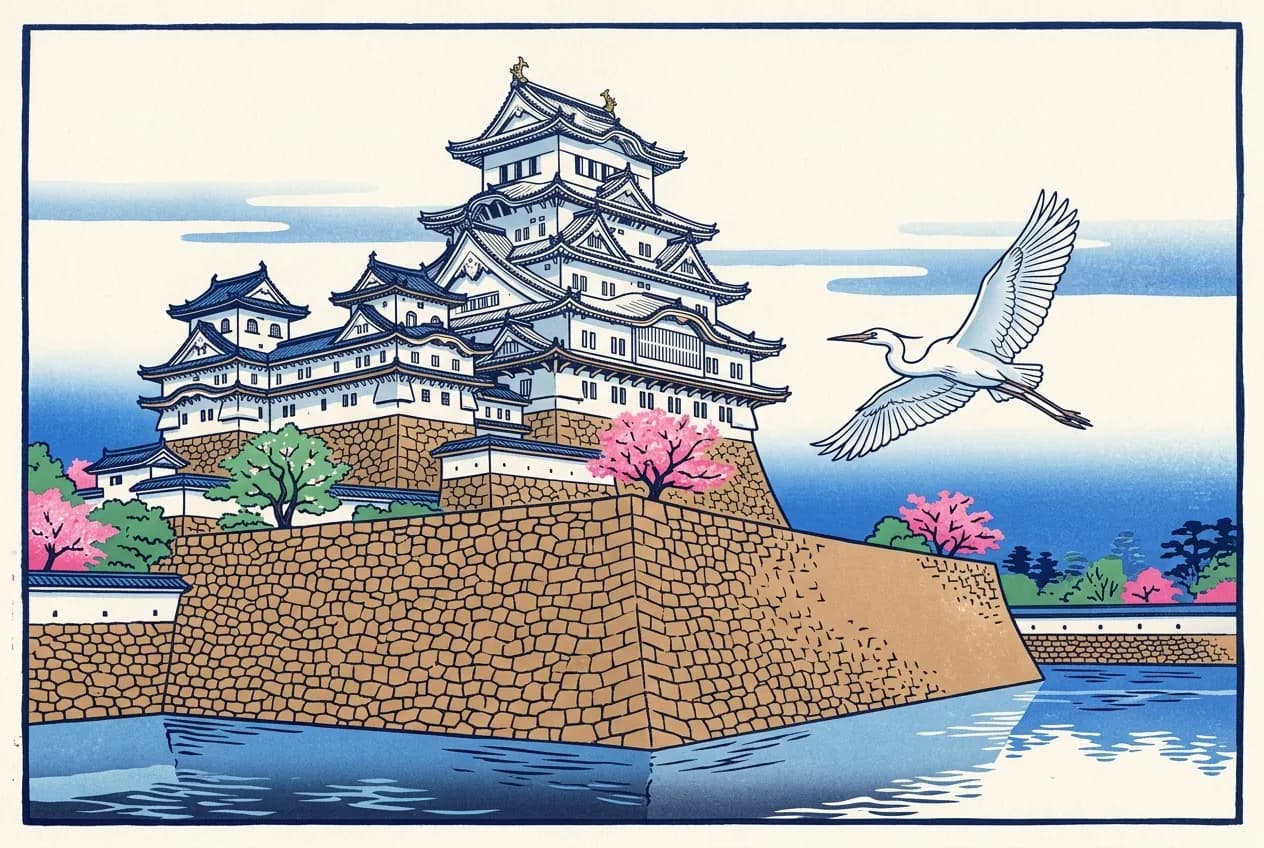
Japanese Castles: Why Only 12 Are Real (and How to Tell)
Hundreds of castle towers rise over Japan — but only 12 keeps are originals, five of them National Treasures. The survivors, the White Heron, and the golden fish on the roof.
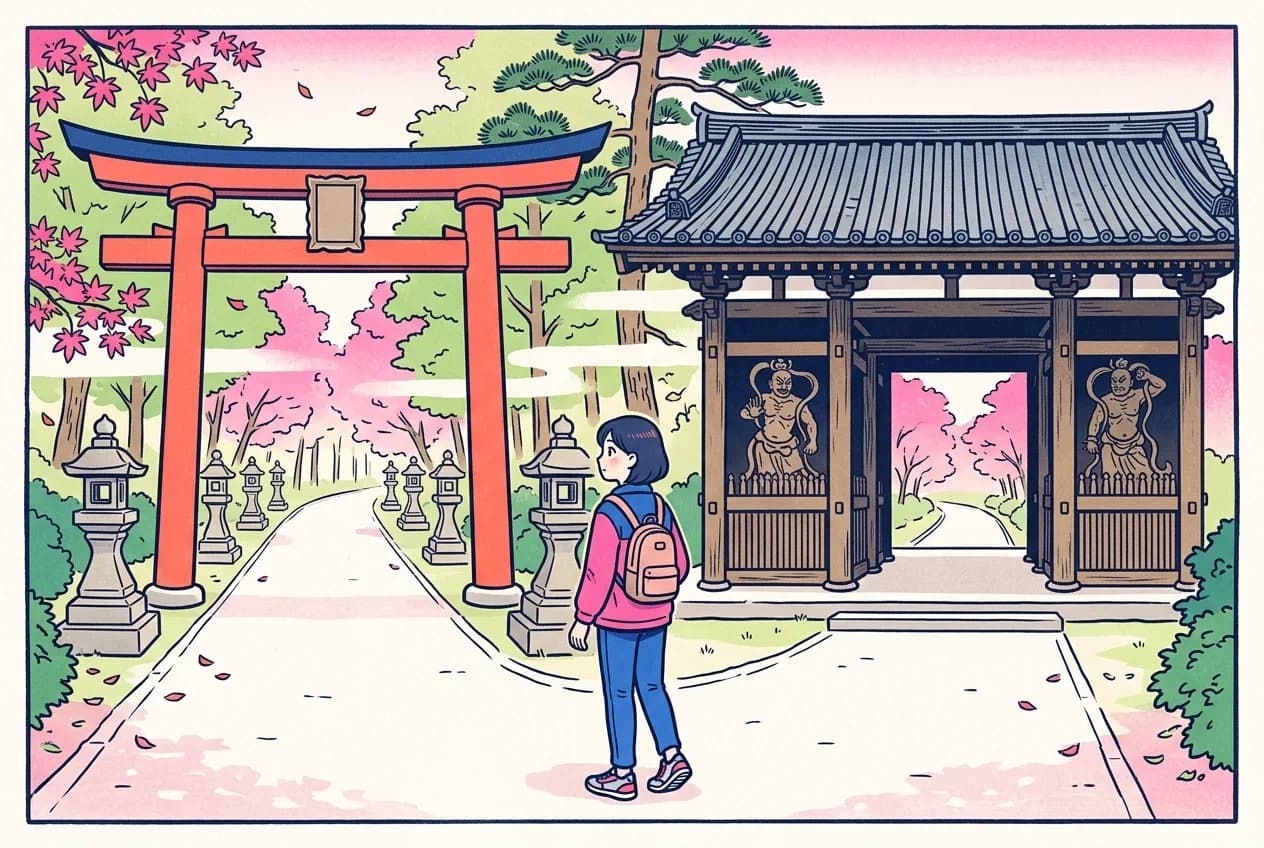
Shrine or Temple? A 3-Second Test and How to Pray at Each
Torii gate: shrine. Roofed gate with guardians: temple. One look tells you which — and each has its own way to pray. The full walkthrough, 5-yen trick included.
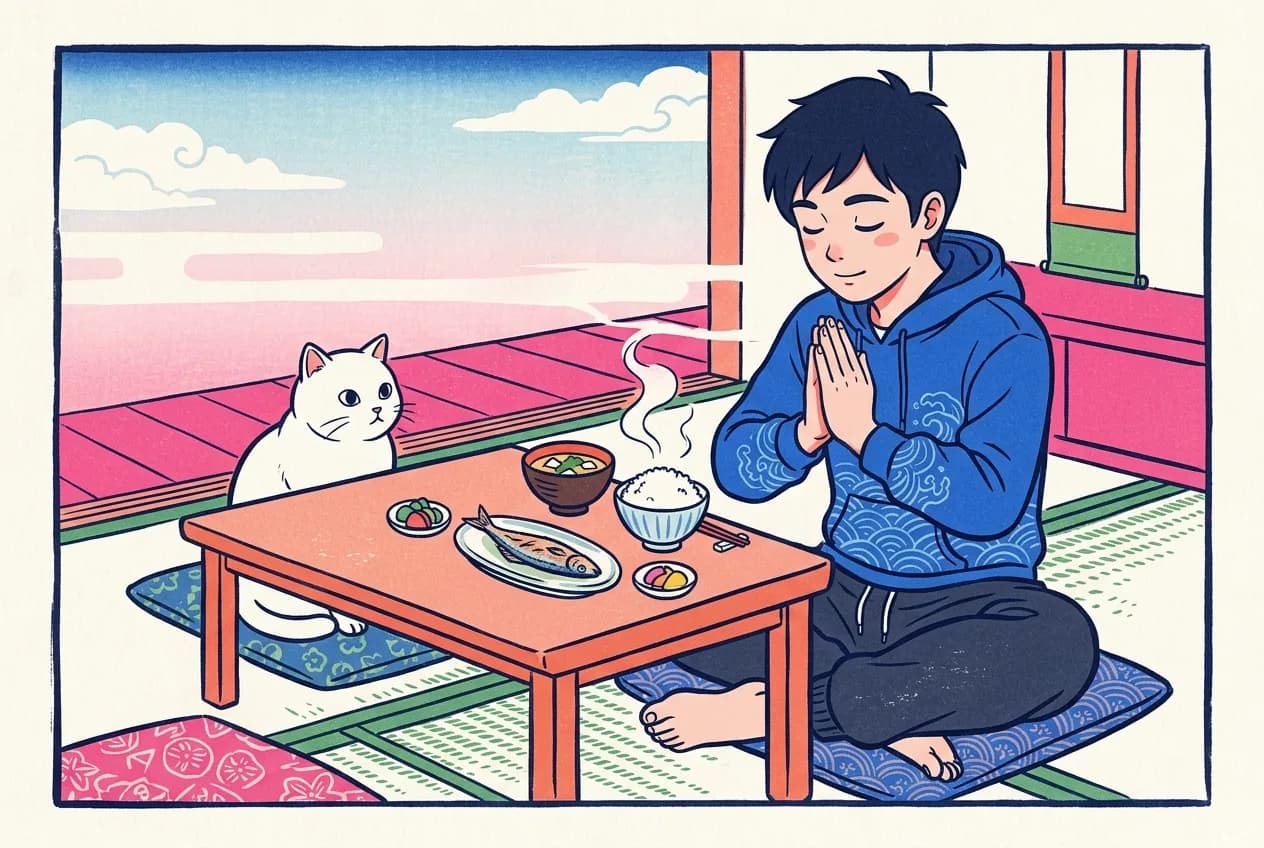
What Itadakimasu Really Means (Not Just “Bon Appétit”)
Itadakimasu is usually translated “let's eat” — but it literally means “I humbly receive,” and what's received is the whole meal: lives, labor and all. The full story, plus when to say it.
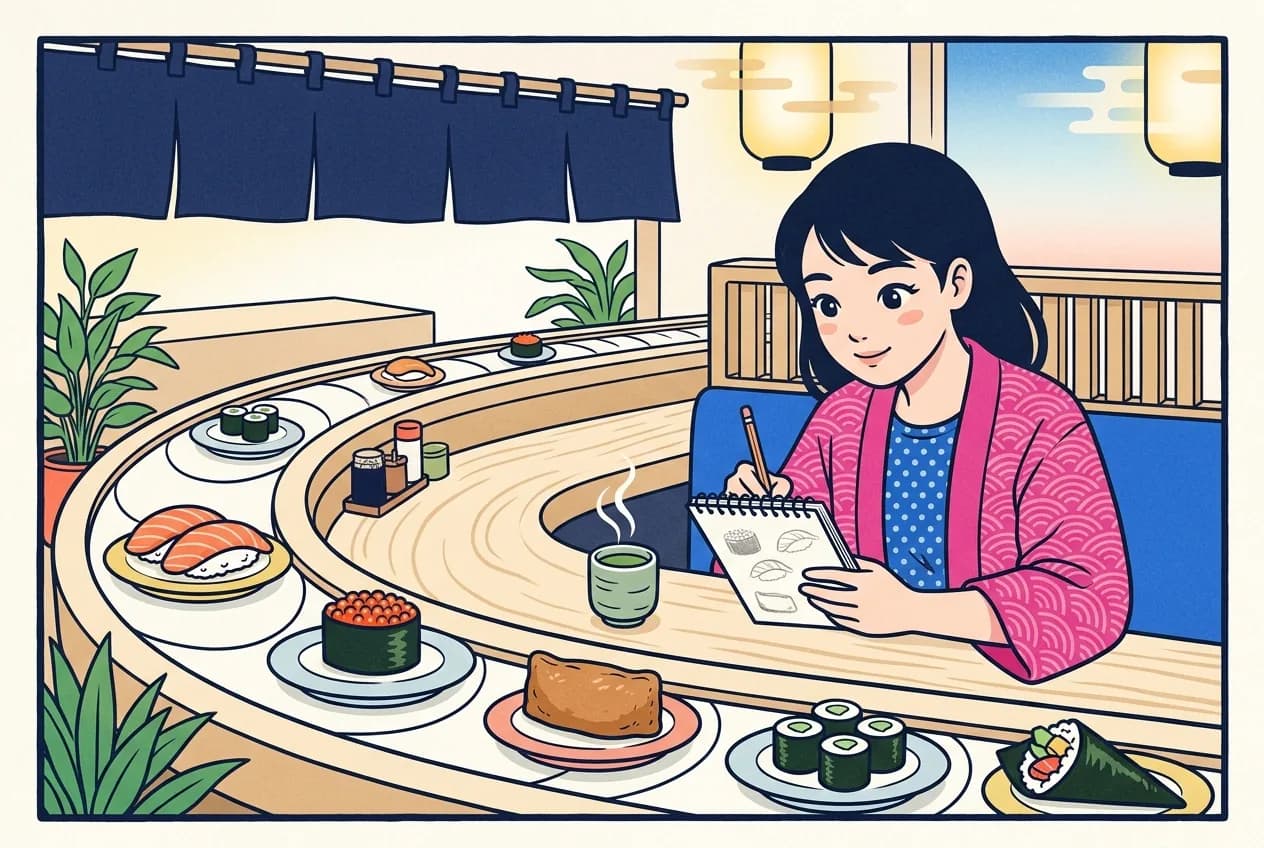
Types of Sushi, Explained by Shape: Order Anything by Sight
Nigiri, gunkan, inari, chirashi — sushi shapes are a visual menu. Learn to name every form on the conveyor belt, plus what the pink ginger is actually for.
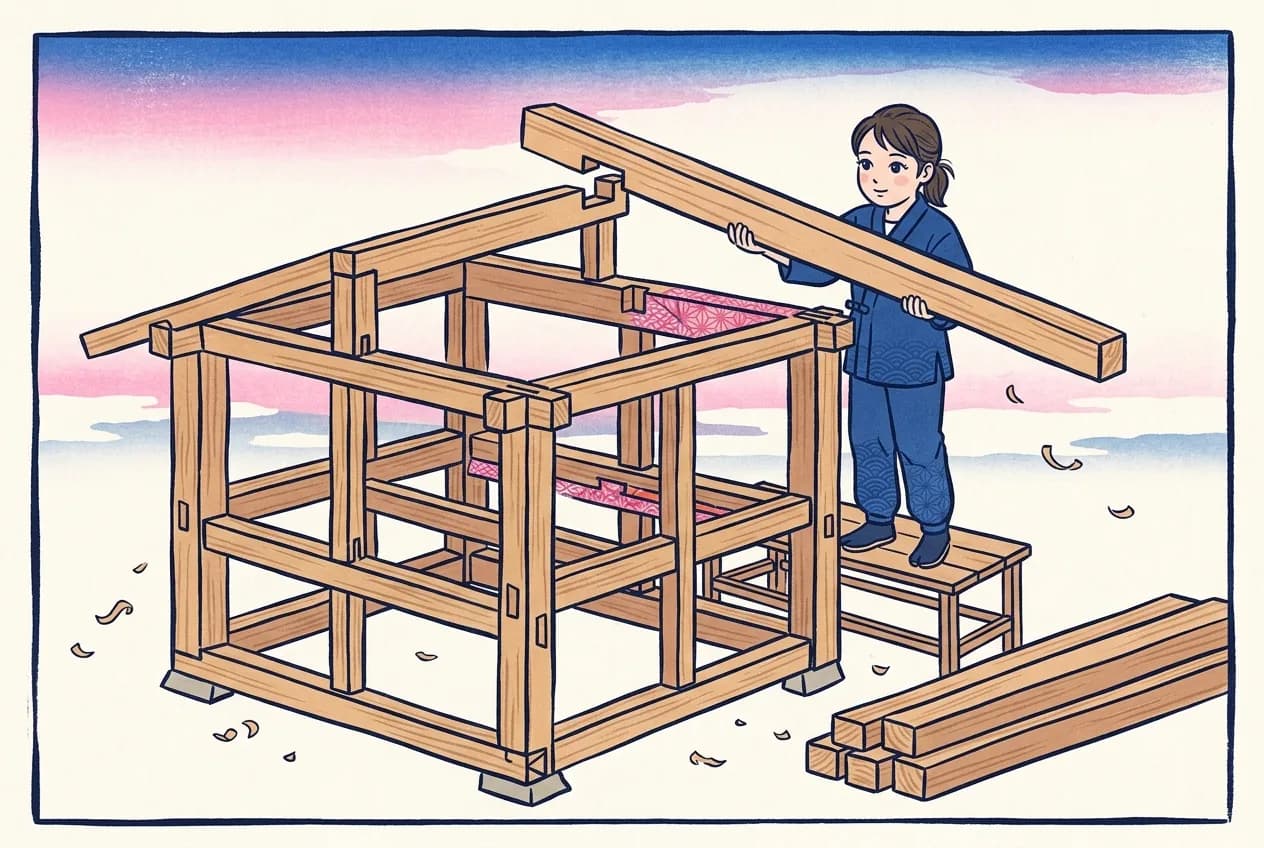
JLPT N4 Grammar: All 57 Patterns, in the Order They Build On
The full JLPT N4 grammar list: 57 patterns in learning order — intent, aspect, conditionals, passive, causative, honorifics — each with a reviewed example.
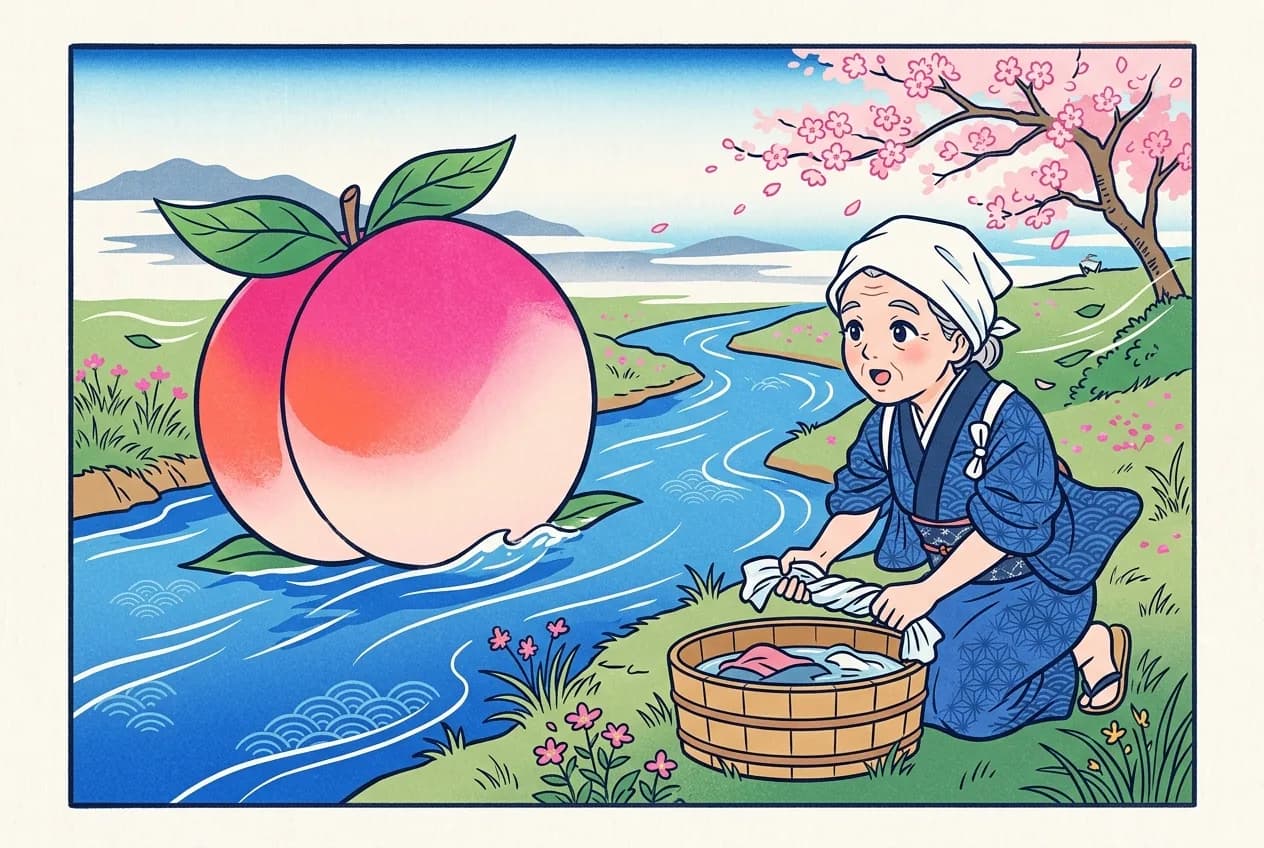
Reading Japanese Folk Tales: An Honest Guide + Momotaro
Folk tales look like perfect beginner reading — short, familiar, free. The honest catch: traditional tellings use old-fashioned Japanese. Here's what to read instead, and a taste of Momotaro right now.
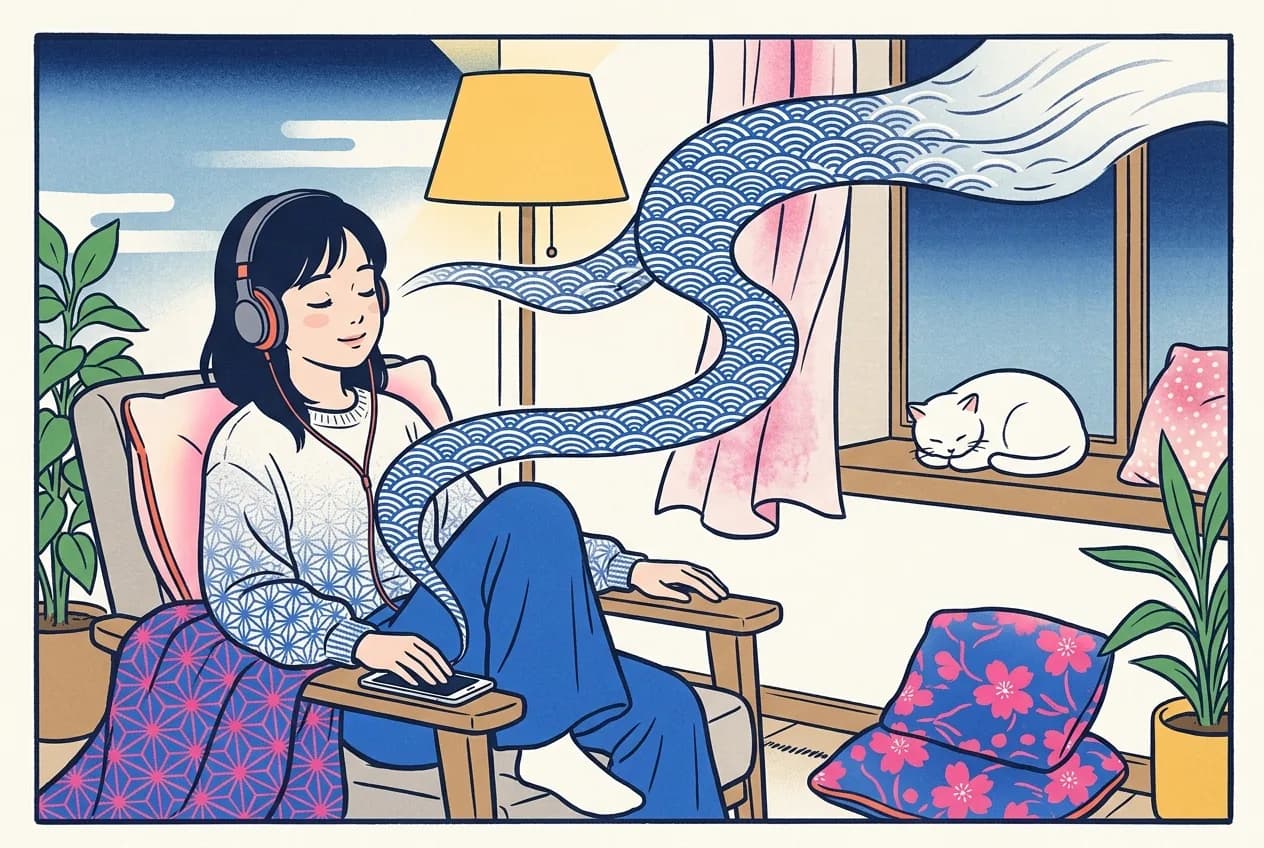
Japanese Listening Practice: Why Passive Listening Fails
Hours of background anime don't become comprehension — attention does. The intensive listening method in 15 minutes a day, how to pick material, and what the JLPT expects of your ears.
How to Learn Kanji: Parts, Then Stories, Then Characters
Kanji isn't 2,000 pictures — it's a couple hundred parts in combinations. Learn the parts, read the stories hiding inside the characters, and the mountain grows stairs.
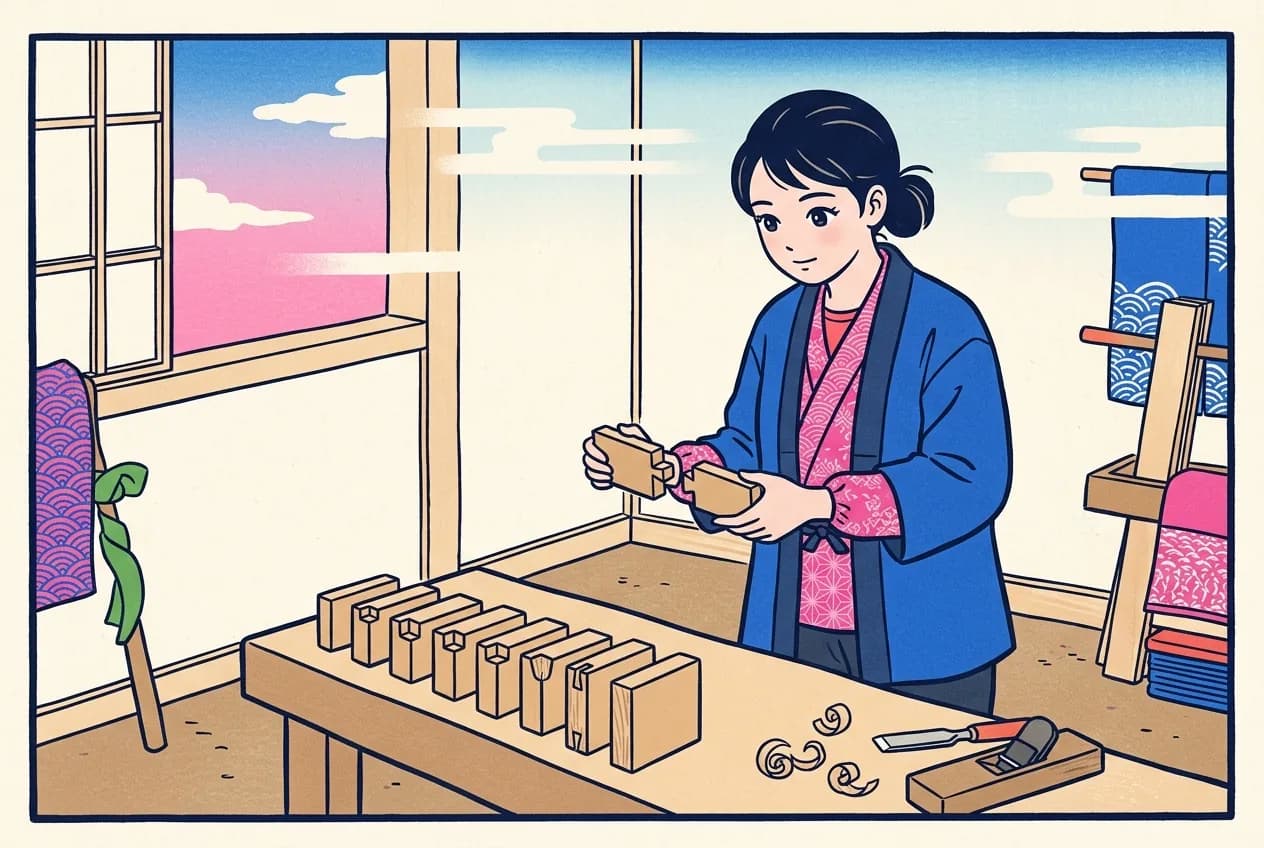
JLPT N5 Grammar: All 57 Patterns in the Order You'll Use
The complete N5 grammar list, resequenced for real life: name things, ask, locate, act, describe, connect. Every pattern with a reviewed example sentence.
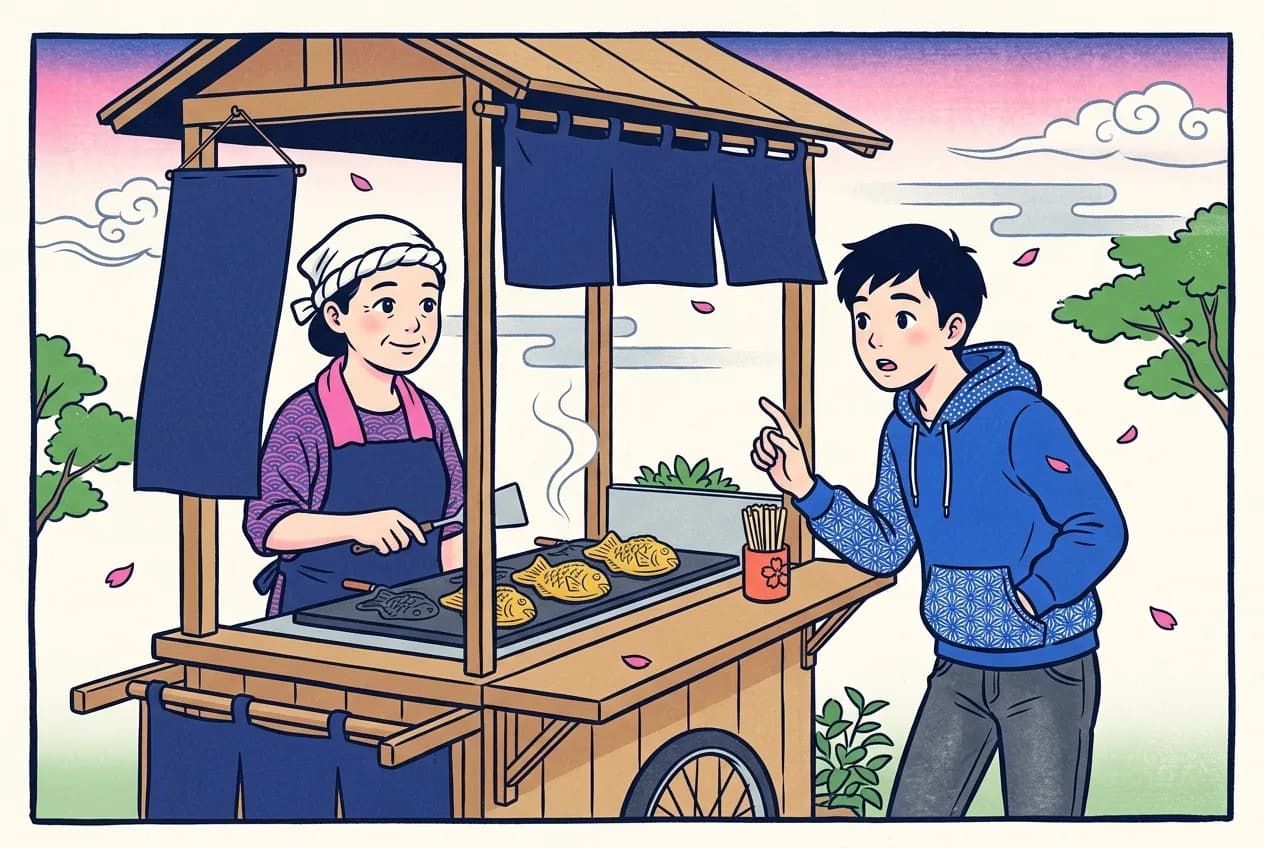
Why You Can Read Japanese but Can't Speak It: a 3-Minute Fix
You pass quizzes and follow anime — then freeze at a food stall. The gap has a name, recognition vs. production, and it closes with tiny daily speaking reps.
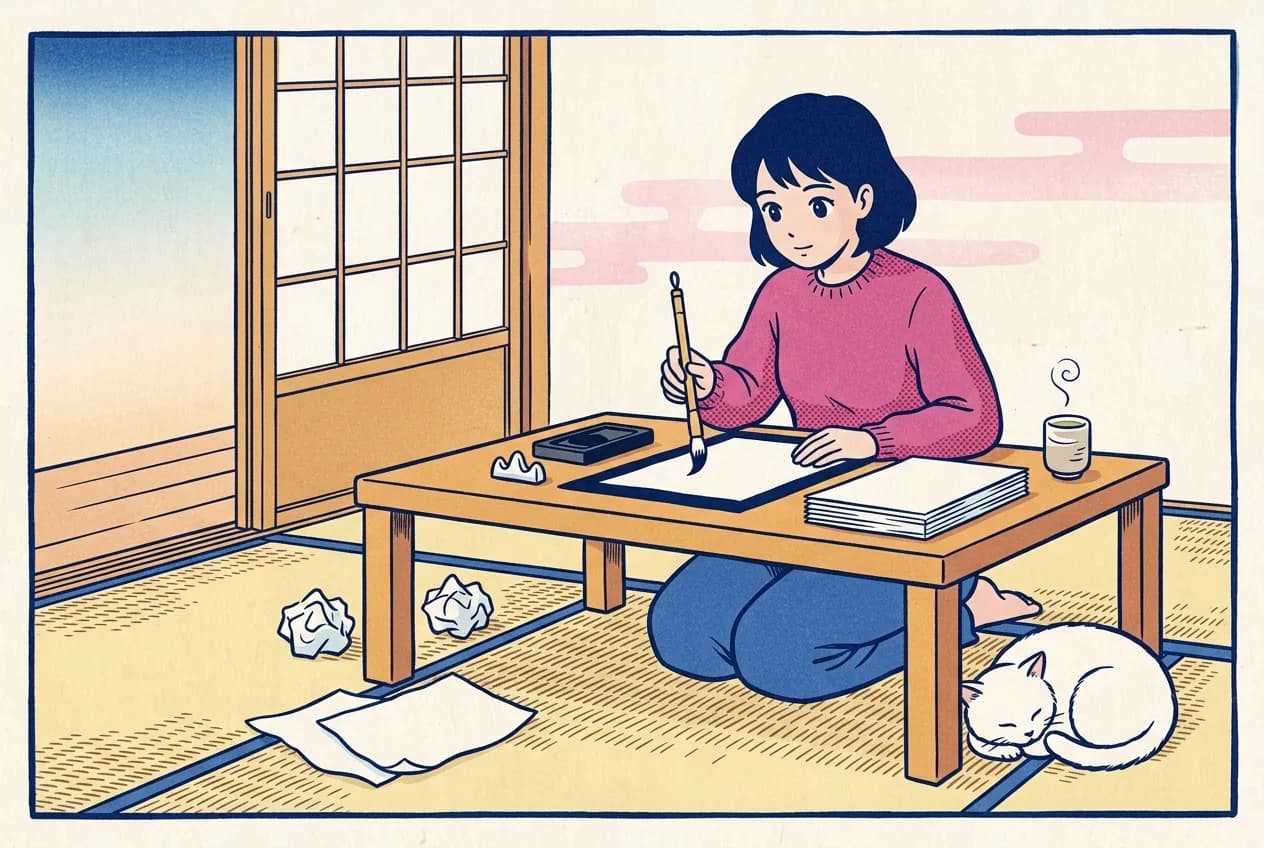
Learn Hiragana in a Week: A Realistic Plan + Shape Stories
Hiragana is 46 characters with no spelling traps — genuinely learnable in a week. The day-by-day plan, the look-alike pairs, and the kanji hiding inside the shapes.
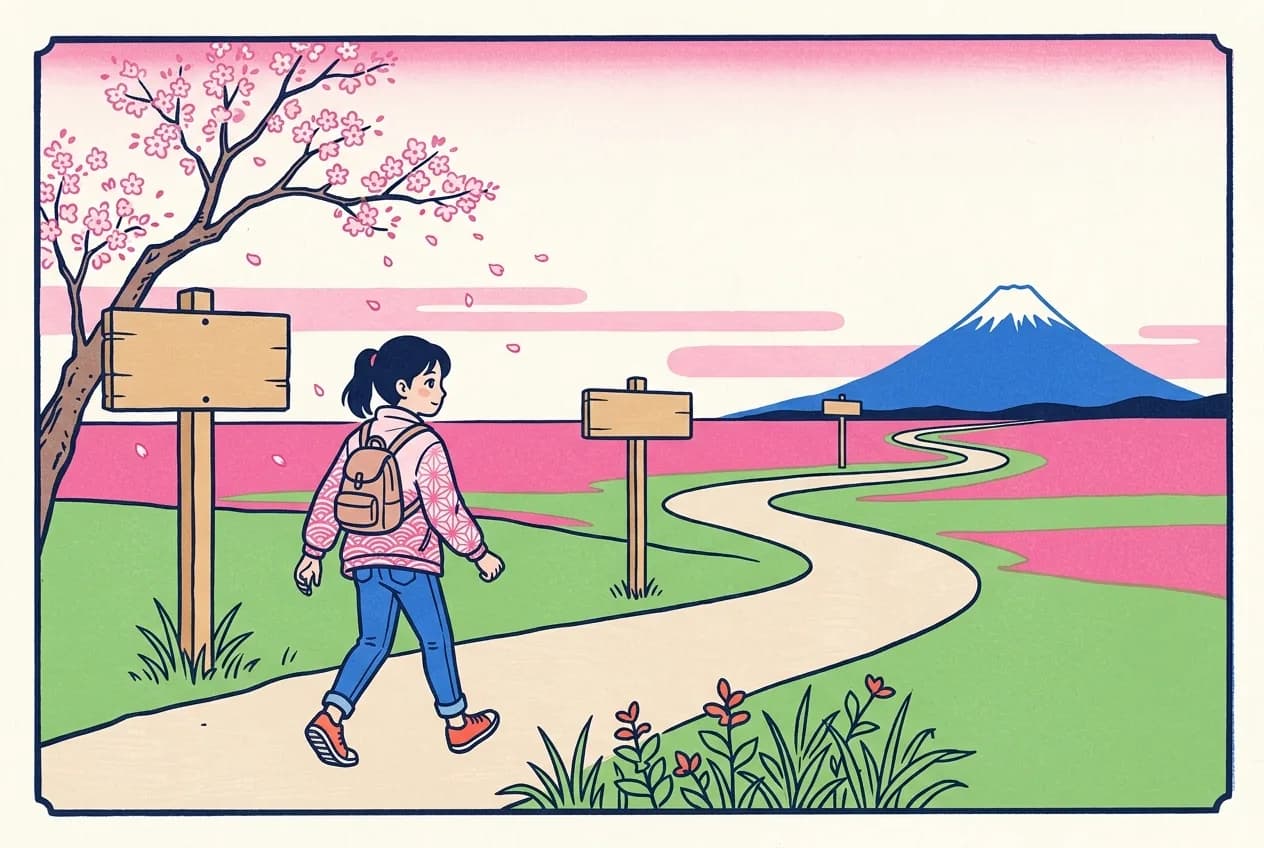
How to Learn Japanese: A Realistic 90-Day Beginner Roadmap
Japanese is order-sensitive: kana, then words, then patterns, with your mouth in the loop from day one. The 90-day sequence that ends in speaking.
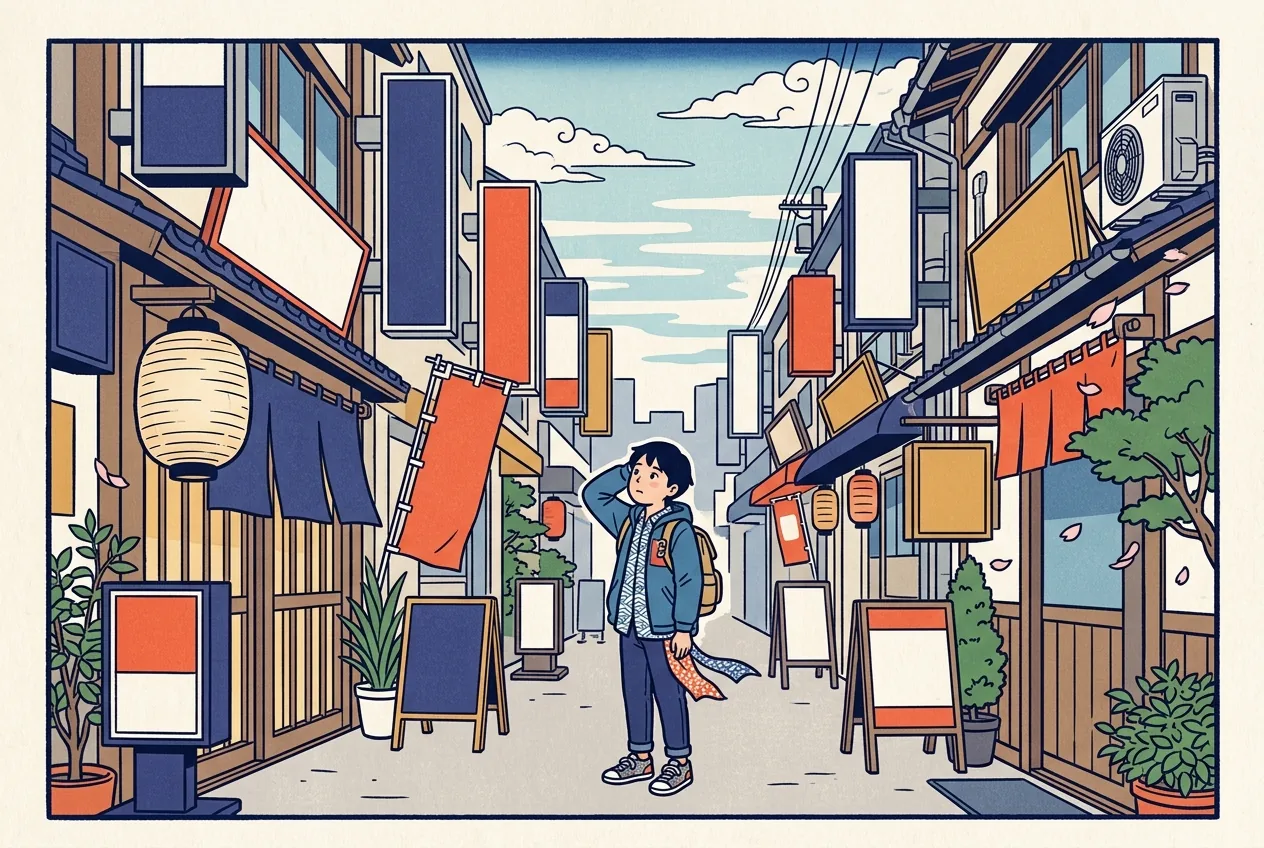
20 Japanese Signs You See Everywhere (and Can Read Today)
Push or pull? Open — or “in preparation”? The 20 signs that cover Japan's doors, shops, stations and streets, readable in one sitting — no Japanese required to start.

Japanese Texting Slang: Kusa, Ri, and “Ojisan Style”
In Japanese chats, laughter is written as grass (kusa), “got it” is a single character (ri) — and middle-aged texters have a famously ornate style all their own. A field guide.
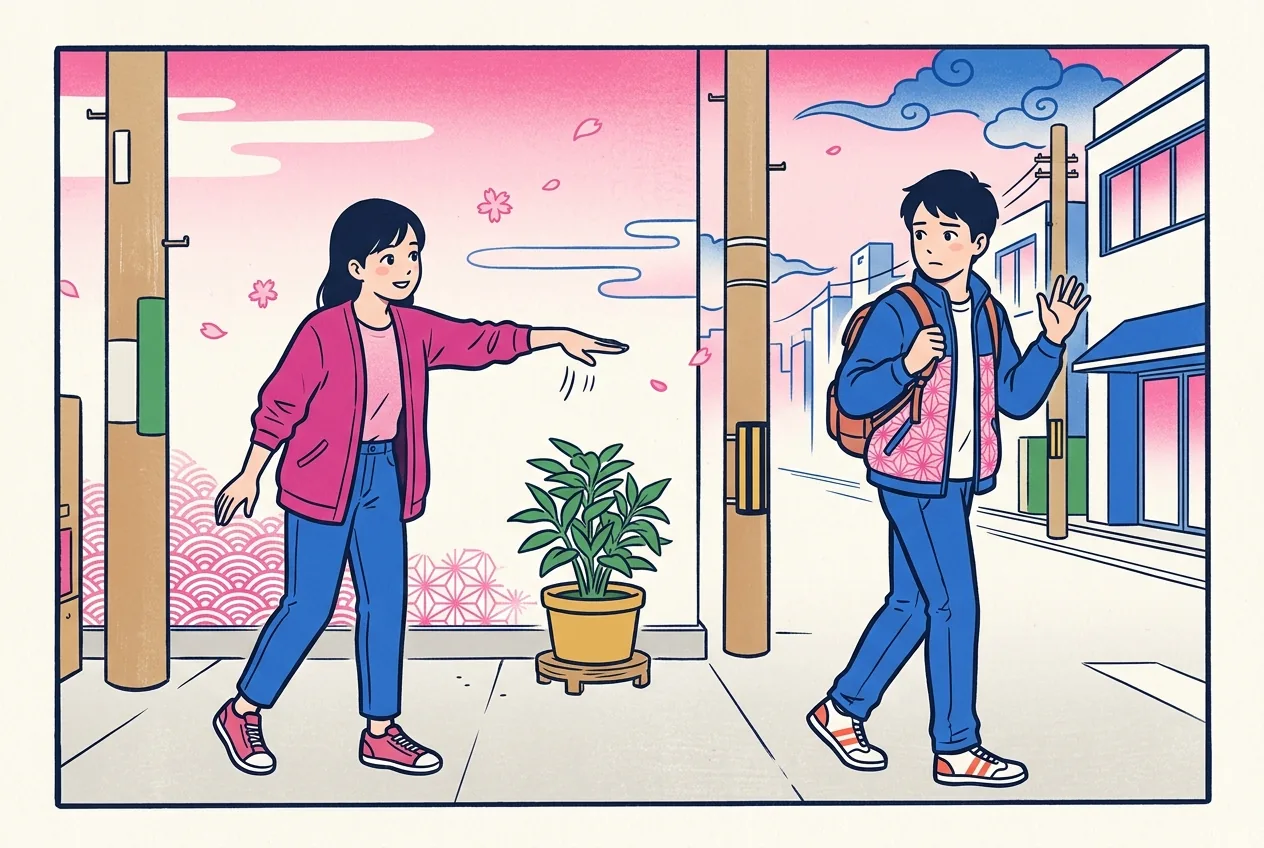
7 Japanese Gestures That Don't Mean What You Think
Pointing at your own nose, beckoning palm-down, a chopping hand through the crowd — Japanese gestures are a second vocabulary. Here's how to read seven signals you'll meet in week one.
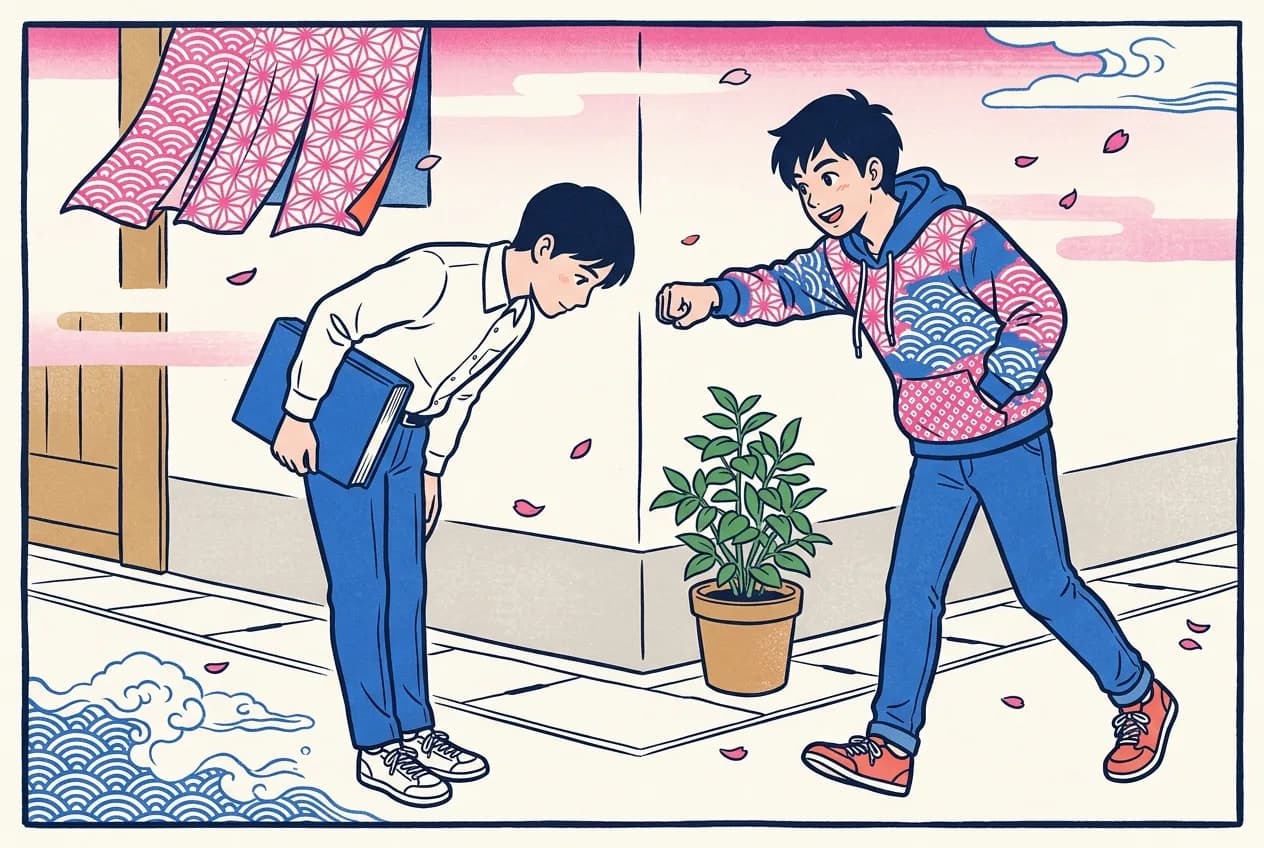
5 Textbook Phrases Natives Rarely Say (and What They Say)
Sayounara, anata, o-genki desu ka — all real Japanese, tuned for situations your textbook never explains. Where five famous phrases really live, and what people say instead.
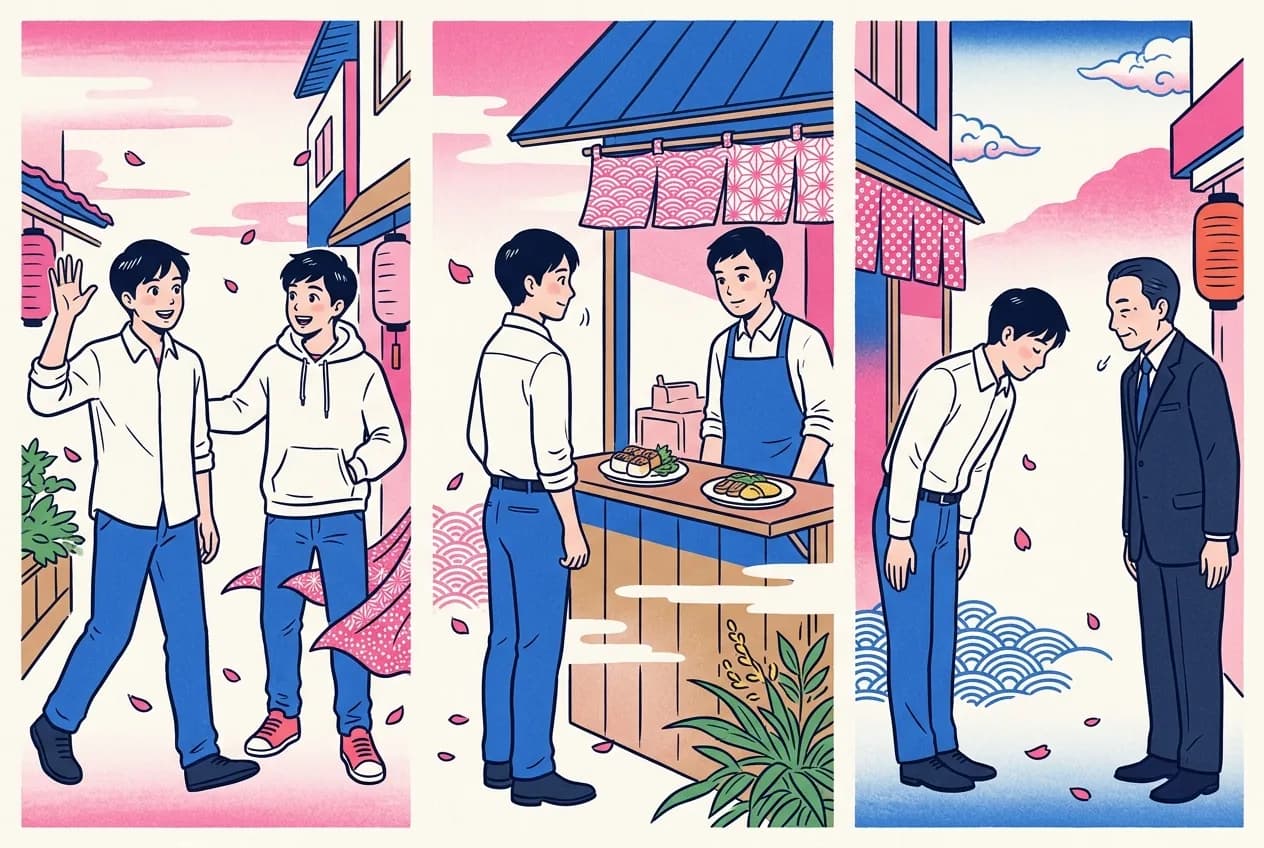
Keigo Explained: The Three Politeness Levels of Japanese
Japanese politeness runs on three gears — casual, desu/masu, keigo. Gear two alone keeps you safe almost anywhere; the twist is that keigo measures distance, not rank.
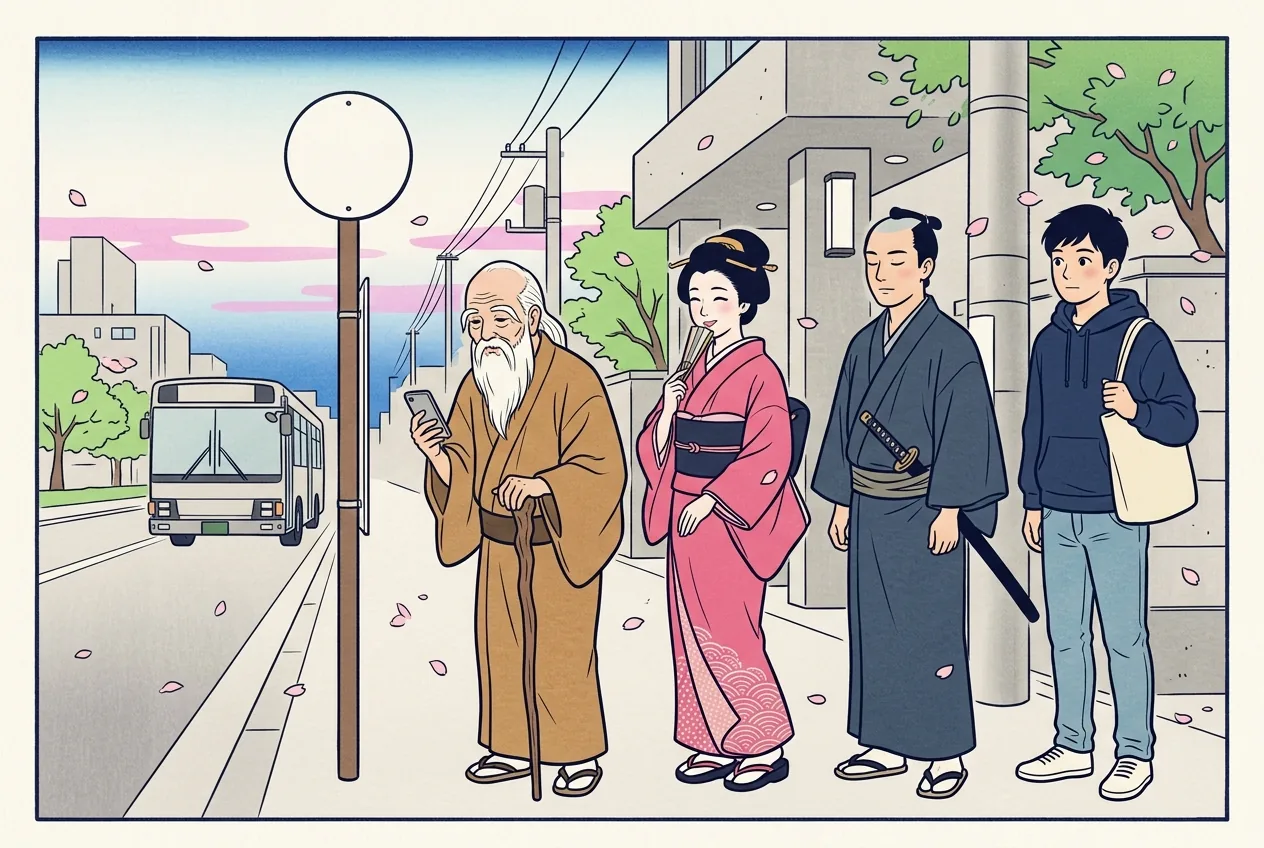
Yakuwarigo: How One Line of Japanese Reveals Who's Talking
Sage, samurai, refined lady — Japanese fiction encodes whole characters into speech itself. The linguistics of role language, and why almost nobody talks that way.
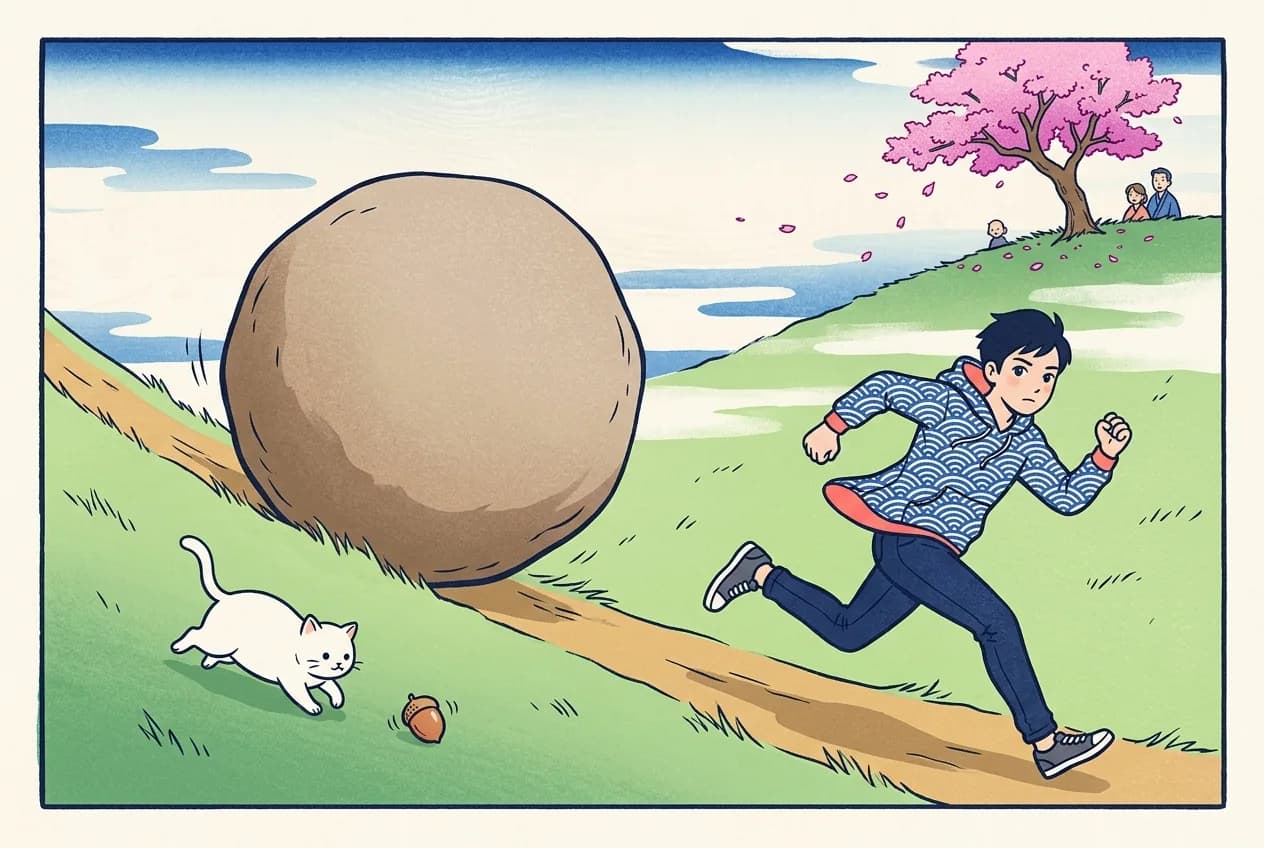
Japanese Onomatopoeia Has Rules: Learn the System, Not Lists
Japanese has thousands of sound words — even one for silence. The secret dial: voiced sounds are heavy, unvoiced light. Korokoro vs. gorogoro explains itself.
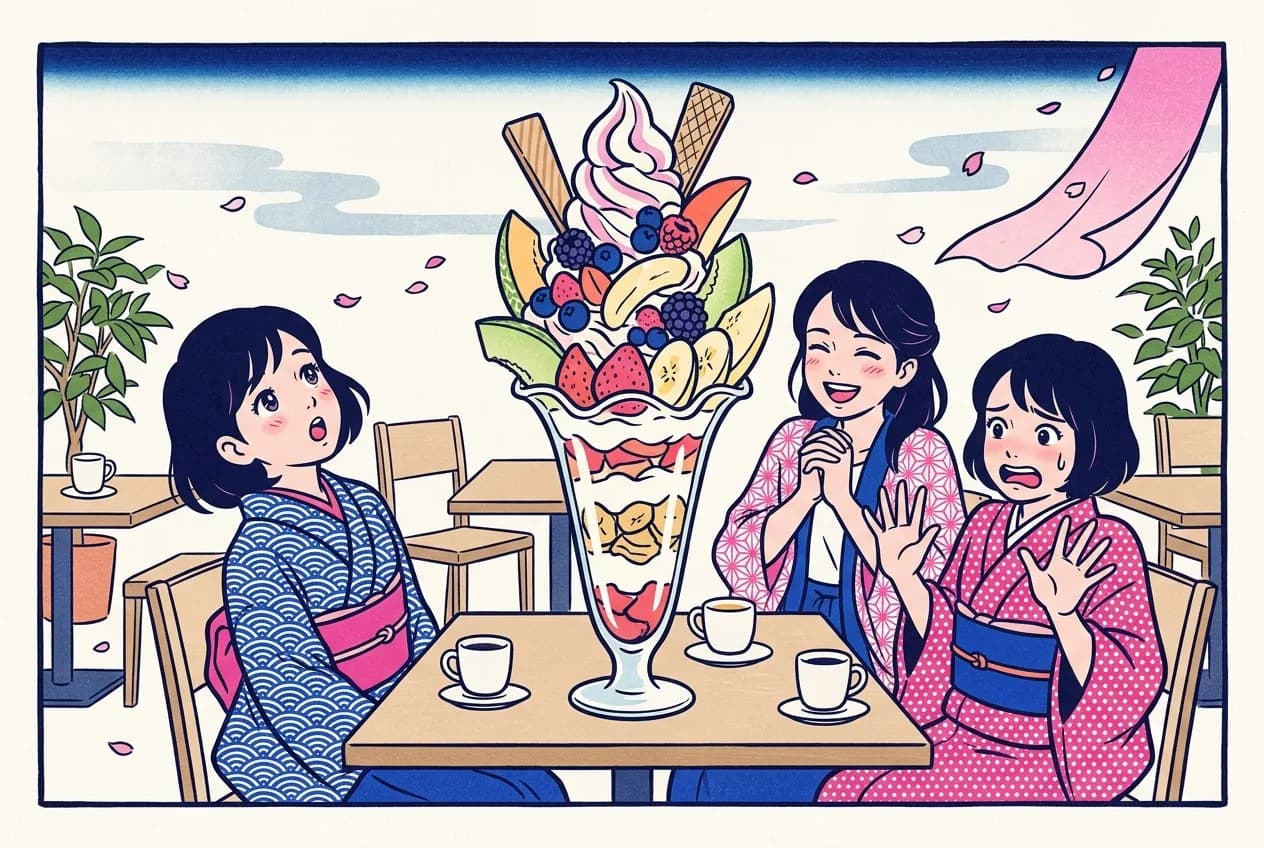
Japanese Slang People Actually Use: the 6 Words That Matter
Yabai, metcha, maji, bimyou — the casual words in every real conversation that textbooks skip. What they mean, who says them, where they're safe.
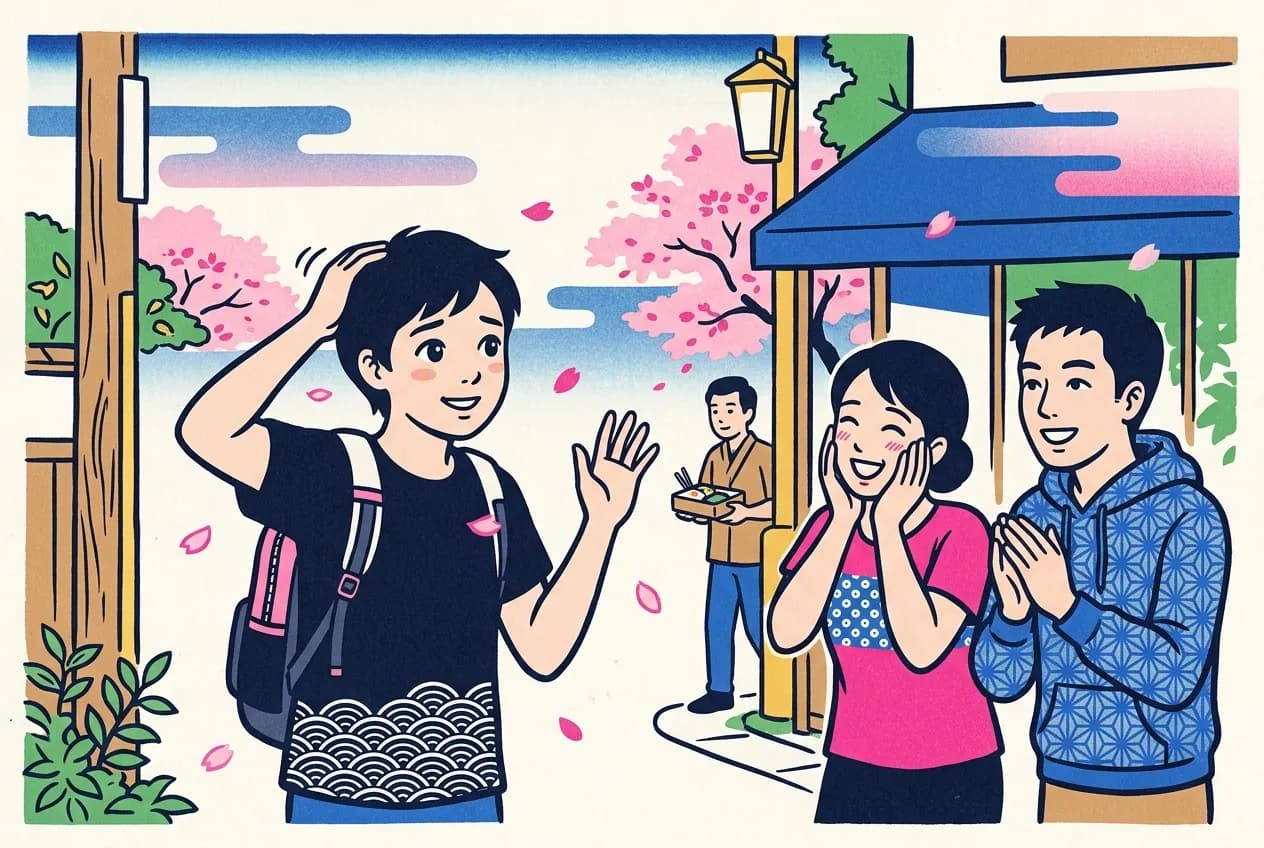
“Nihongo Jouzu” — Compliment or Not? And How to Reply
“Nihongo jouzu” means “your Japanese is good” — usually a friendly compliment, not a verdict on your level. When it is real praise, when it is just politeness, and the humble reply (mada mada desu) that fits.
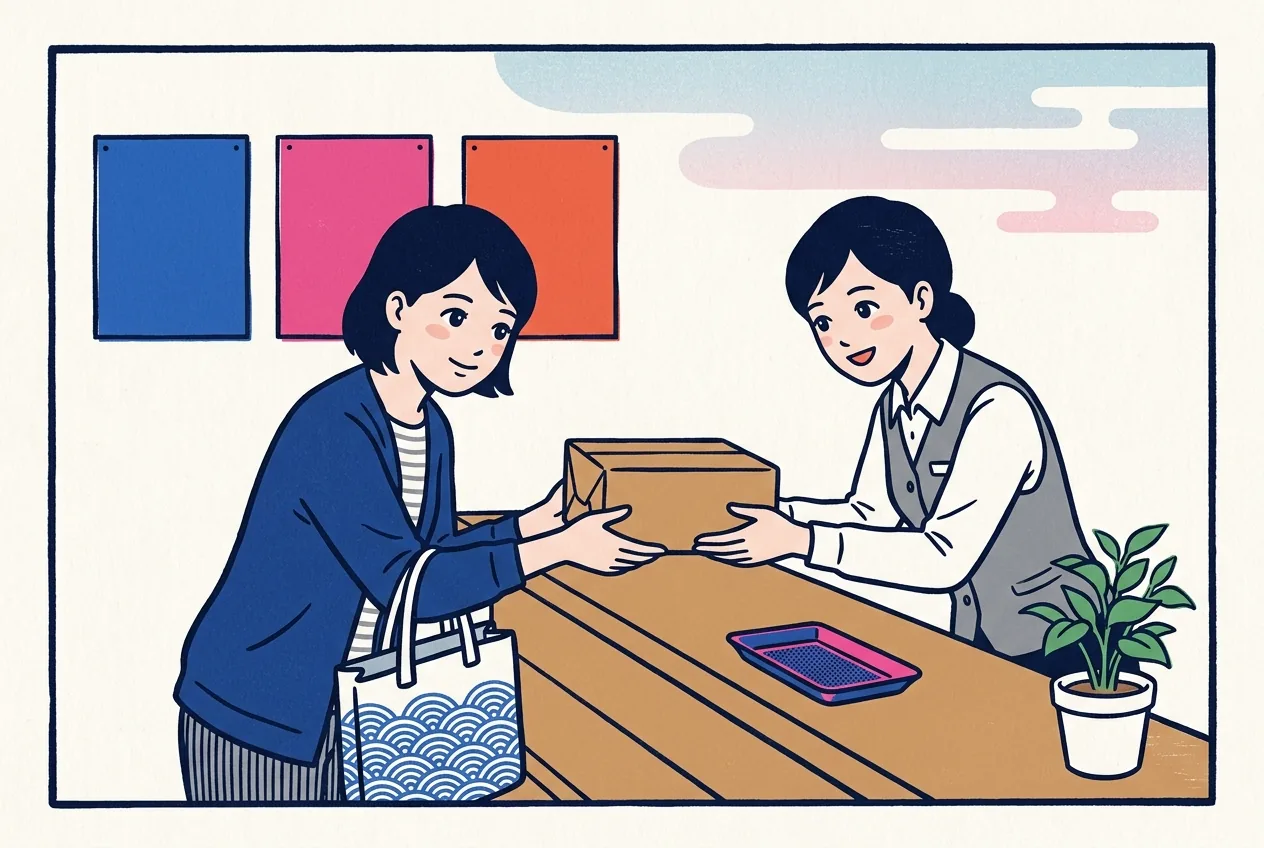
Kudasai vs. Onegaishimasu: Which “Please” Do You Need?
Kudasai asks for things and actions; onegaishimasu works even silently. Where each fits — plus the phone trick: Tanaka-san wo onegaishimasu.
Wakaru vs. Shitteiru: Two Ways to “Know” (One Sounds Cold)
Shiru is information arriving; wakaru is when it clicks. Why “I know” is shitteimasu but “I don't know” is shirimasen — and when it sounds cold.
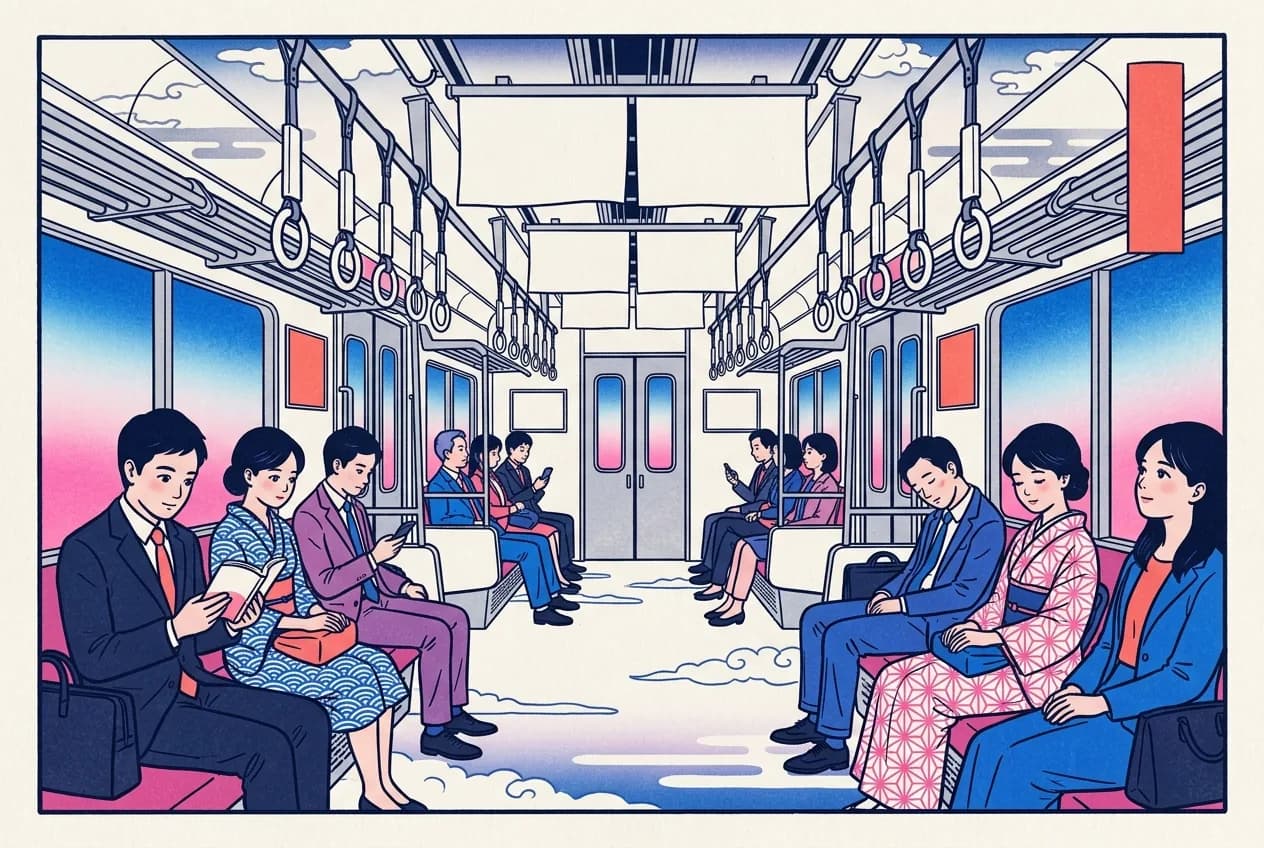
The Unspoken Rules of Japan: Ranked by What Really Matters
Shoes, trains, chopsticks, queues — Japanese etiquette ranked by how much it really matters, with the recovery phrase that fixes almost any slip.
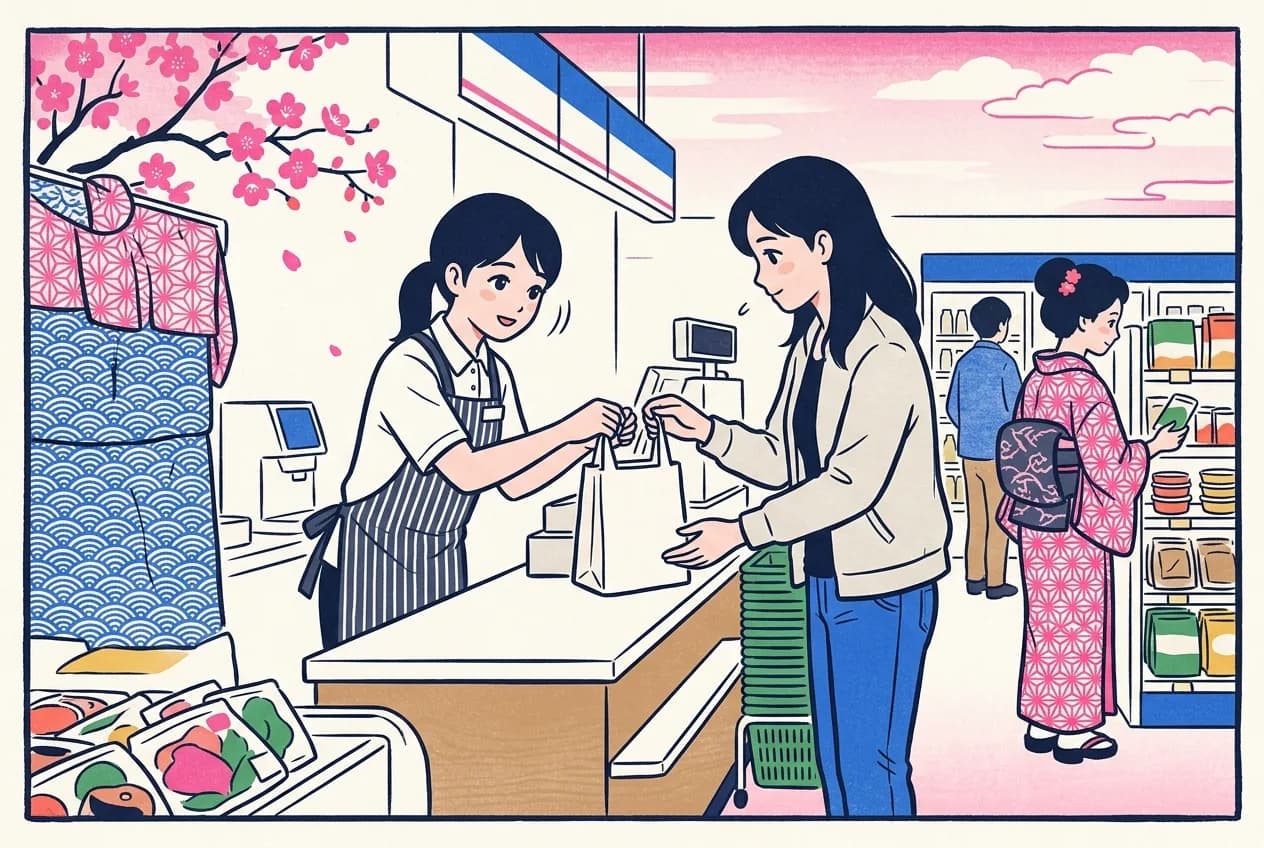
Japanese Convenience Store Phrases: the 5 Konbini Questions
Konbini staff speak fast, but they always ask the same five questions. Learn to catch 温めますか (atatamemasuka) and 袋はご利用ですか (fukurohagoriyoudesuka) — and the one answer that works for almost everything.
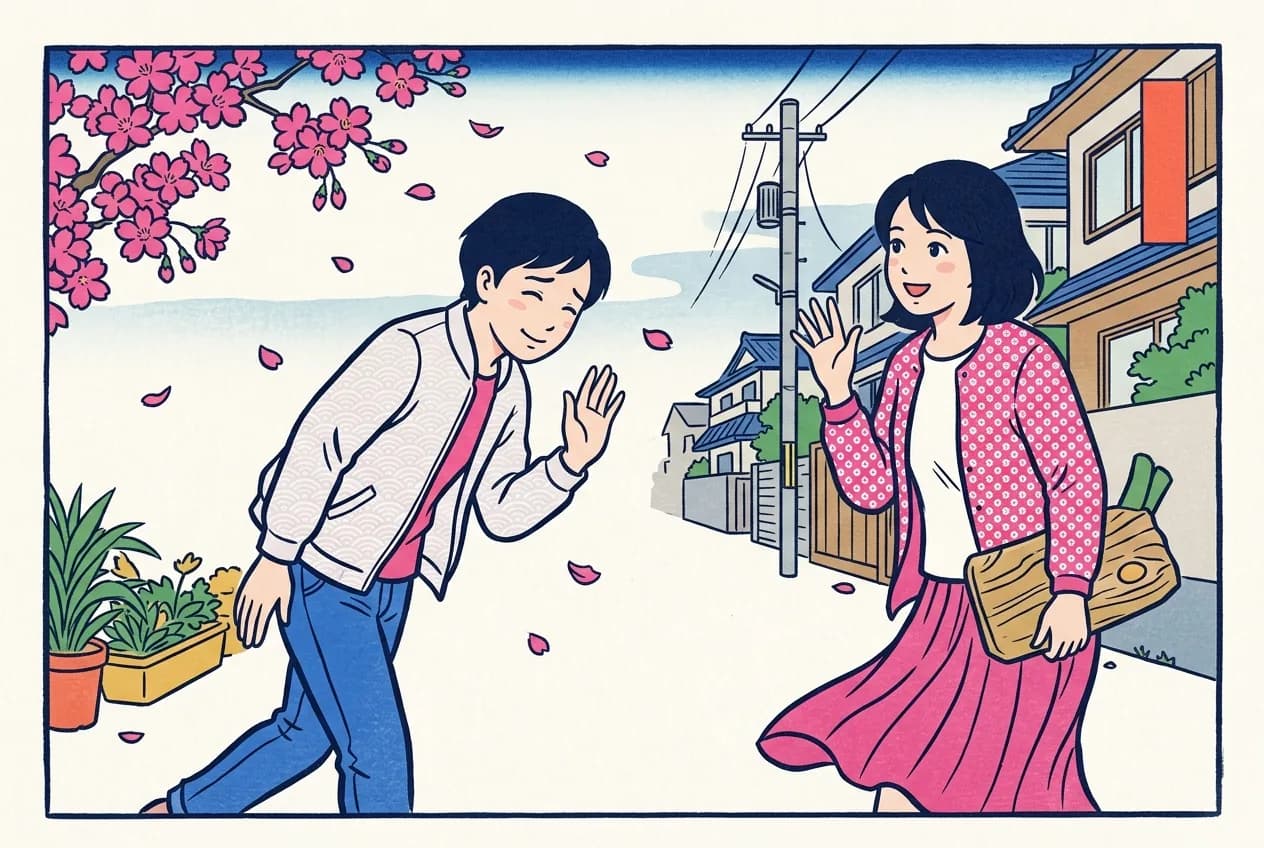
How to Say No in Japanese Politely (You Rarely Say “No”)
いいえ (iie) is grammatically correct and socially wrong. Learn the five real ways Japanese people decline — and how to hear the “no” hidden inside a “maybe.”
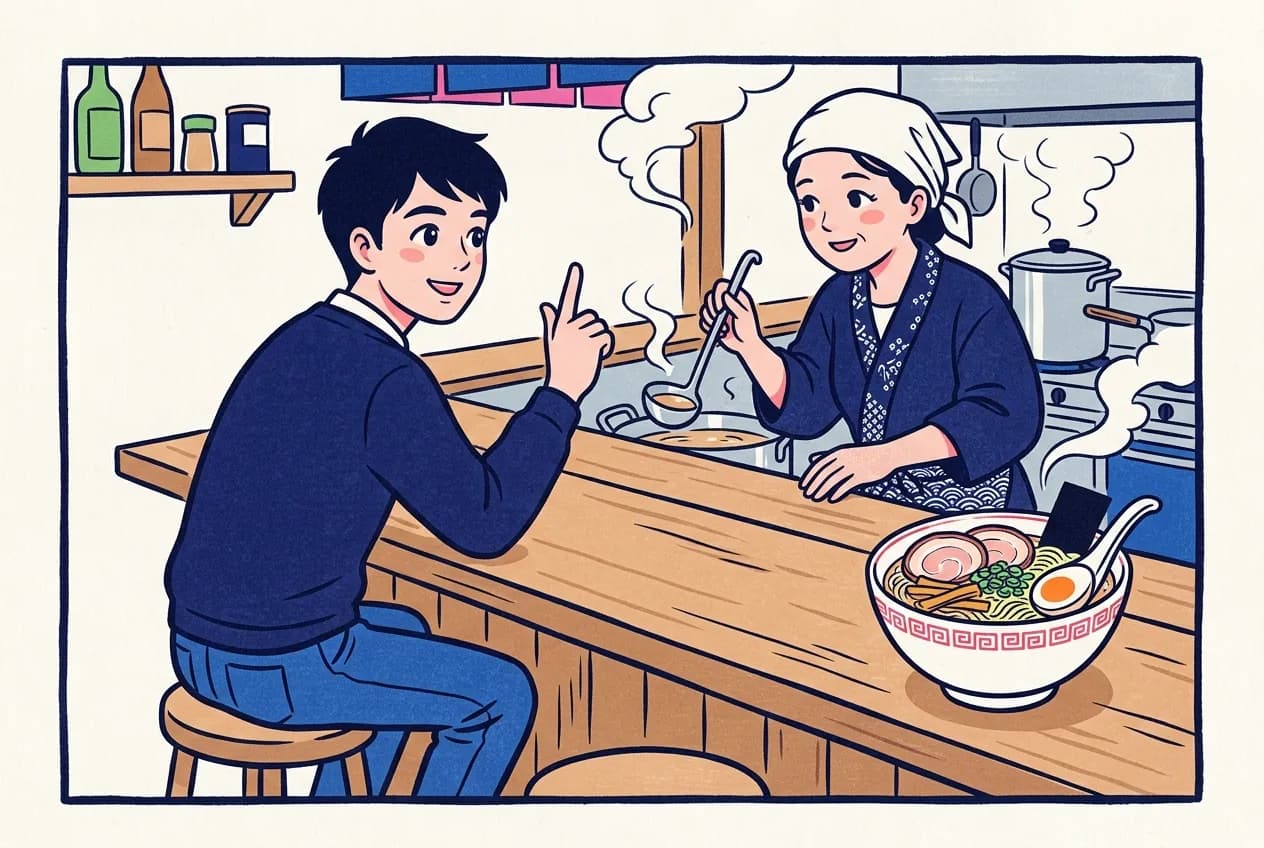
How to Order Food in Japan: Ticket Machines and Key Phrases
Japanese restaurants run on three systems — ticket machine, calling the staff, or a tablet. Learn which one you're in, what staff will say, and the exact phrases to answer with.
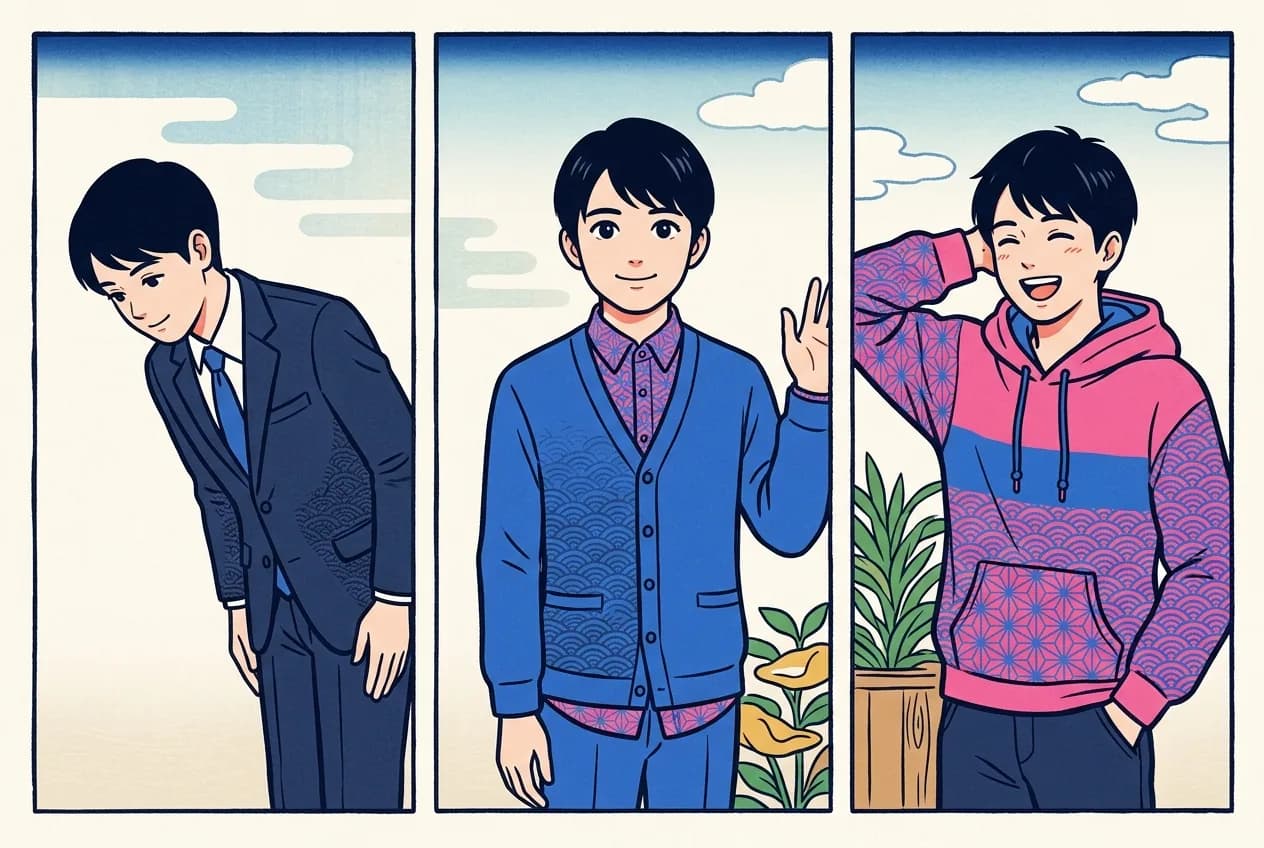
Watashi, Boku or Ore? How to Choose Your Japanese “I”
Japanese has more than a dozen words for “I.” Here's how watashi, boku, ore and uchi actually differ — and how to pick the right one for the room.
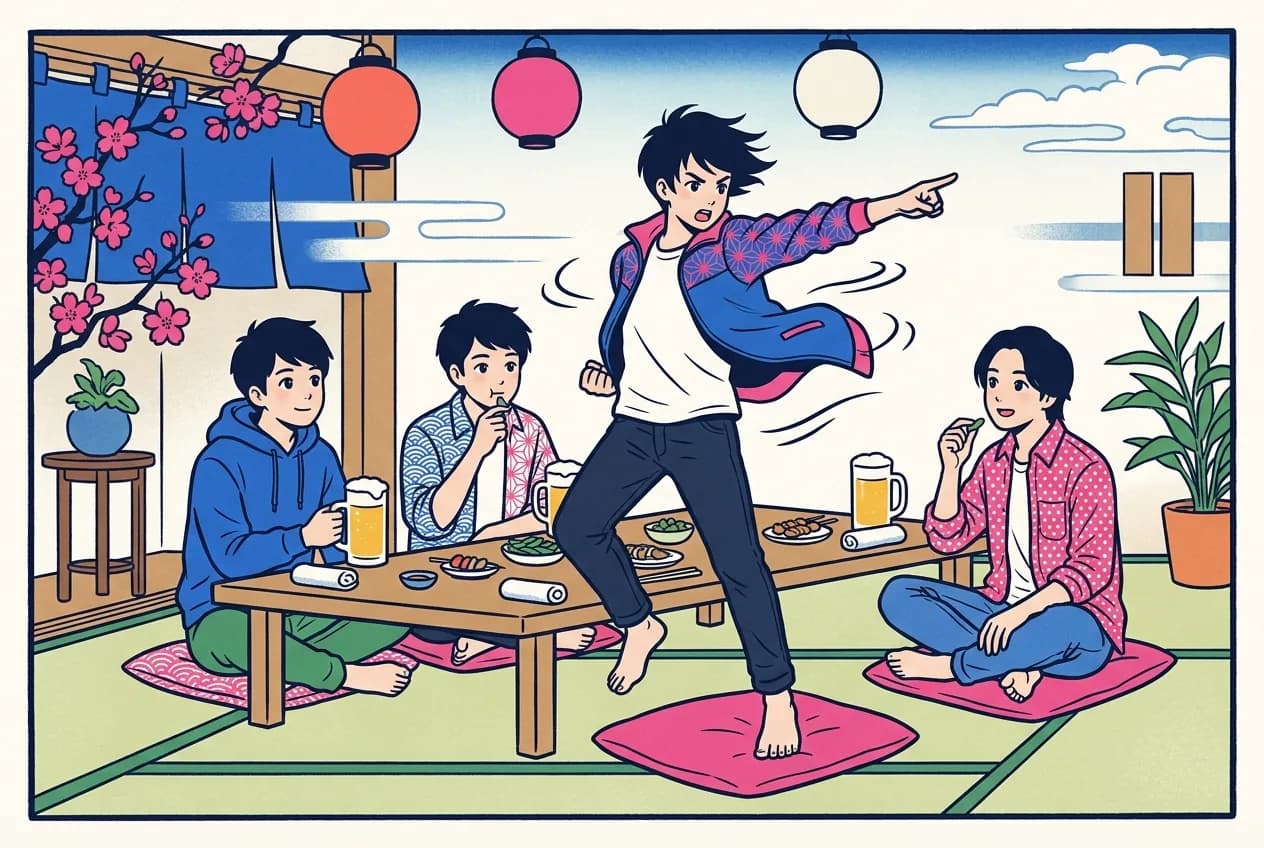
Anime Japanese vs. Real Japanese: Can You Use These 6 Words?
Kisama, omae, ore, 〜daze — anime is full of Japanese your textbook never explains. Here's which words real people actually use, and which are pure fiction.