Arimasu vs Imasu: The Difference Is What Moves on Its Own
Published 2026-09-09 · Updated 2026-10-01 · 9 min read
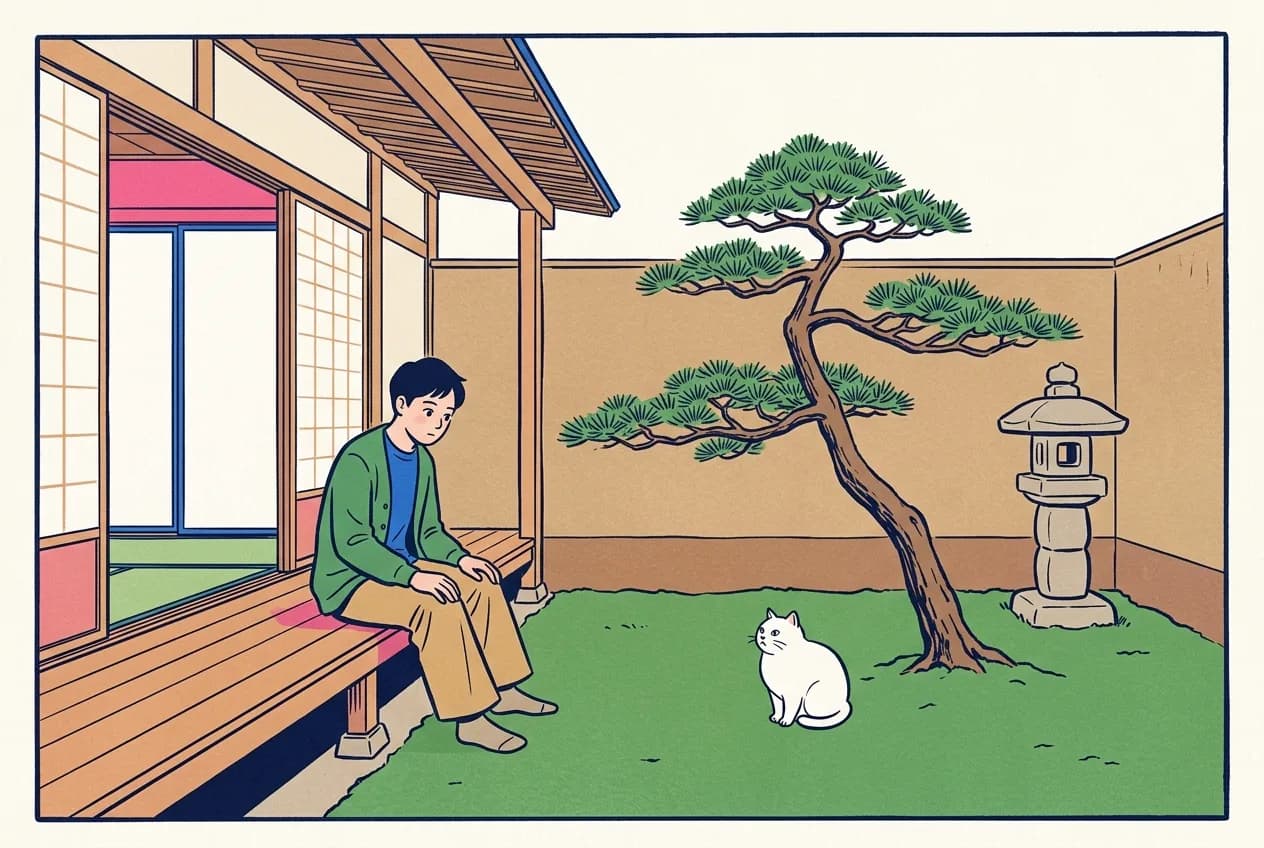
A tree is alive, and it still takes the verb for things that do not move. Japanese splits “there is” by what moves under its own power, not by what is alive.
Picture a garden with a cat in it, and a fridge with breakfast still inside:
庭に猫がいます。 (niwaninekogaimasu.)
There is a cat out in the garden.
冷蔵庫の中に卵と牛乳があります。れいぞうこのなかにたまごとぎゅうにゅうがあります。 (reizoukononakanitamagotogyuunyuugaarimasu.)
Inside the fridge there are eggs and milk.
Use these two verbs to say what is in a place, and mark the place with に (ni). Do not use them to say what something is like: ここは静かです (kokohashizukadesu) needs です (desu), not あります (arimasu).
One question decides the verb, and it keeps deciding after you leave the garden. It picks the verb for what you have, and it still applies when you say what is not there.
Arimasu and imasu: what moves under its own power
あります (arimasu) is used for what does not move on its own. います (imasu) is used for anything that moves under its own power: people, animals, and insects.
Plants take あります (arimasu). They are alive, and they take it because they stay in one place.
Here are the two verbs side by side, with the negative of each.
| Verb | Used for | Negative |
|---|---|---|
| あります (arimasu) | Things that do not move by themselves | ありません (arimasen) |
| います (imasu) | People, animals, insects | いません (imasen) |
Read the Used for column and you can see what decides the verb. One entry covers what does not move by itself, and the other covers what does.
Neither entry asks whether the thing is alive. That is where the trouble starts for beginners, so the garden is the place to test it.
Both verbs come at the end of the sentence, and each negative keeps that position. The words around it stay the same when you swap one verb for the other.
Each negative is the same verb with a different ending, so learning one form gives you the other. ありません (arimasen) and いません (imasen) keep the split that the positive forms make.
Being alive is not the test
Being alive is not the test here. Moving on its own is.
A tree in the garden is alive, and it does not move on its own. So it takes あります (arimasu), the verb for what stays where it is.
Say what the garden has in it, and the tree takes the same verb as the fridge:
庭に木があります。 (niwanikigaarimasu.)
There is a tree in the garden.
One other answer feels natural here, and it decides by the wrong thing. It picks います (imasu) because a tree is alive, and being alive is not what these verbs ask about.
Bring a cat into the same garden and the verb changes. A cat moves under its own power, so the sentence needs います (imasu).
Nothing about the garden changed except which thing you named. The verb followed the thing, and not the place it is in.
A potted plant on a desk works the same way. It is alive, it stays where you put it, and it takes あります (arimasu).
Beginners often split these by size instead. Big things get います (imasu) and small things あります (arimasu), and size is not the test either.
A car takes あります (arimasu) even while it is moving, and a goldfish takes います (imasu). The car moves because a driver moves it, and the goldfish moves because it wants to.
Neither size nor being alive decides it, and one question does. A thing that moves only when someone else moves it takes あります (arimasu).
So one question comes before the verb. Does this thing move under its own power, or does something else move it?
Run the test in that order and it stays quick. Name the thing, ask the question, and let the answer choose between the two verbs.
The same two verbs say what you have
The same two verbs also say that you have something. What you own is treated as something that exists, so the same rule still picks the verb.
A friend wants to meet you this evening, and today is full:
今日は時間がありません。 (kyouhajikangaarimasen.)
(I) don't have any time today.
Time does not move on its own, so it takes あります (arimasu) and the negative ありません (arimasen). People take the other verb, whether they are in a place or in your family.
Count your younger brothers for someone, and that other verb appears:
私は弟が二人います。 (watashihaotoutogafutariimasu.)
I have two younger brothers.
A brother moves under his own power, so the sentence needs います (imasu). Use あります (arimasu) here and it makes a person sound like an object.
That is the error to avoid when you talk about family:
❌ 兄があります (anigaarimasu)
⭕ 兄がいます (anigaimasu)
I have an older brother.
Sentences about having are built like sentences about places. Something exists, the sentence names it with が (ga), and the verb answers the one question about moving.
So you do not need a separate verb for owning things. The verb you already chose for the garden works for what is in your bag and in your day.
Ask about someone else's family and the verb stays the same. The question and the answer both use います (imasu), because the thing being counted is a person.
The person verb also answers where you are when someone calls you:
今、駅にいます。 (ima,ekiniimasu.)
I'm at the station right now.
Day to day, you will use it far more for where people are than for what you own.
Negatives, and the particle that marks what is there
For the negative, あります (arimasu) becomes ありません (arimasen) and います (imasu) becomes いません (imasen). Nothing else in the sentence changes.
You look into a room and find it empty:
部屋にはだれもいません。 (heyanihadaremoimasen.)
There's no one in the room.
The negative of the person verb says that nobody is there. The place still takes に (ni), and only the ending of the verb is different.
Number changes nothing here either. One egg or a dozen, 卵があります (tamagogaarimasu) applies to both.
The thing that exists is marked with が (ga). を (wo) marks an object you act on, and these verbs do not take it.
A dog is in your friend's room, and this is the error to avoid:
❌ 部屋に犬をいます (heyaniinuwoimasu)
⭕ 部屋に犬がいます。 (heyaniinugaimasu.)
There is a dog in the room.
Existing is not something you do to a dog, so を (wo) does not fit here. The dog is what is there, and が (ga) says so.
が (ga) introduces the thing you have noticed in a place. When a sentence opens with は (ha) instead, the field note on sentence structure covers why.
Say the place first: に (ni) before the thing
Name the place first with に (ni), then the thing that is there with が (ga), and close with the verb.
place + に (ni) + thing + が (ga) + あります (arimasu) / います (imasu)
A sentence like this often opens with a word like there. Japanese opens with the place instead, and the verb comes last.
Naming the place first also tells the listener where to look before you say what is there.
That order stays the same when you turn the sentence into a question. Only the ending changes.
In the negative, you name the place, name the thing, and finish with ありません (arimasen) or いません (imasen).
You are out and you need cash, so you ask someone on the street:
この近くに銀行がありますか。このちかくにぎんこうがありますか。 (konochikakuniginkougaarimasuka.)
Is there a bank near here?
Change the noun and the same sentence asks a store for what you want. A bank, a charger, a bottle of tea: the verb stays あります (arimasu).
Words that say where inside a place something is have their own entry in the N5 grammar list. Naming the place itself with ここ (koko) belongs to the field note on this and that.
When you ask a store whether it has something, you have already answered that one question. The thing on the shelf does not move under its own power, so the sentence ends in ありますか (arimasuka).
The tree and the fridge take the same verb, and that stops feeling strange once you use it. Choose the wrong verb in a store and you will still be understood.
Key takeaways
Ask whether it moves under its own power: yes takes います (imasu), no takes あります (arimasu).
Both verbs also say what you have, and the same rule picks between them.
What is arimasu used for?
あります (arimasu) says that something is in a place, and it covers what does not move on its own. Things and plants take it, and so does a car.
The same verb also says what you have. 時間があります (jikangaarimasu) means you have time, and the negative ありません (arimasen) says that you do not.
It does not say what something is like. That work belongs to です (desu), as in ここは静かです (kokohashizukadesu).
What is the difference between arimasu and imasu?
います (imasu) covers what moves under its own power, and あります (arimasu) covers what does not. People, animals, and insects take います (imasu).
Being alive is not the difference. A plant is alive and takes あります (arimasu), because it stays in one place, and a goldfish takes います (imasu).
What does arimasu ka mean?
It asks whether something is there. In a store it is how you ask whether they have what you want, and the answer comes back with あります (arimasu) or ありません (arimasen).
この近くに銀行がありますかこのちかくにぎんこうがありますか (konochikakuniginkougaarimasuka) asks whether a bank is near you. Change the noun and you can ask for anything a store might sell.
Where Ukiyoe Japanese fits
Inside Ukiyoe Japanese, these two verbs get a page of their own, and it puts the garden question to you before it answers. Beside it is Particle gym, a drill that asks for the missing particle in sentences about a teacher and a dog. The speaking practice sets you in a convenience store, with the same pattern you need to ask what a store has.
Flashcards, about 3 minutes. Free, no account needed.
Popular
Latest