“Nihongo Jouzu” — Compliment or Not? And How to Reply
Published 2026-07-29 · Updated 2026-09-05
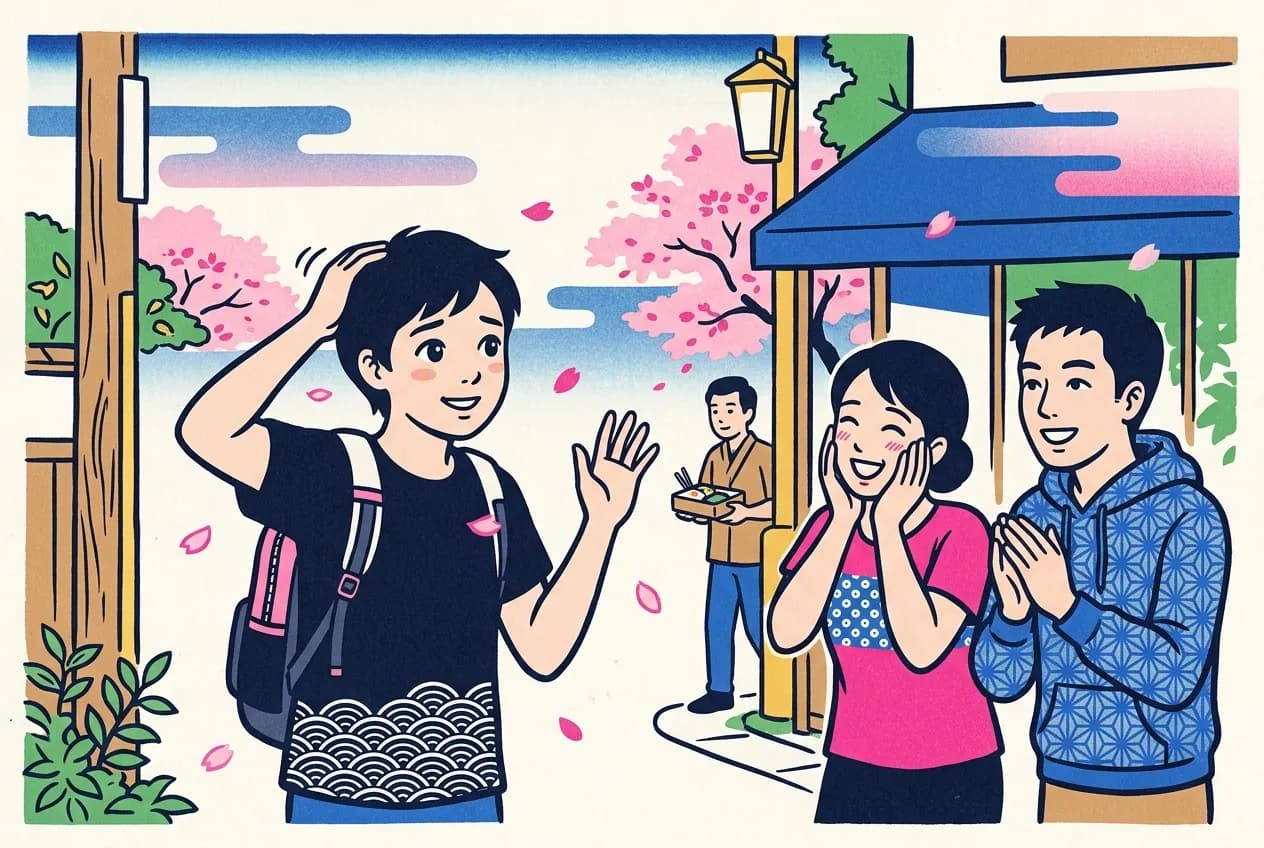
Is 日本語上手ですね (nihongojouzudesune), “your Japanese is so good,” a real compliment? Usually yes — it is warmth rather than a fluency assessment, and you can hear it after a single こんにちは (konnichiwa).
Start with the reply you will need most:
いえいえ、まだまだです (ieie,madamadadesu)
Oh no, I've still got a long way to go.
Use this reply whenever someone praises your Japanese, no matter how little you have said.
One word was enough. Welcome to the most famous compliment in language learning.
日本語上手ですね (nihongojouzudesune) works less like a report card and more like a greeting. It means “you made an effort toward my language, and I'm delighted.”
So don't overthink the praise. Do learn the reply, because the response is where you can genuinely impress.
Why one word triggers it
Japanese conversation leans on small positive acknowledgments to build warmth quickly, and complimenting effort is one of the easiest. Attempt even a syllable of Japanese and you give the other person a reason to encourage you, welcome you, and keep the mood generous.
The lower your level, the more often you'll hear it, precisely because the compliment is about the attempt, not the achievement. That's not condescension. It is hospitality with grammar.
The meme, reframed kindly
Forums joke that the day people stop saying 上手 (jouzu) is the day you're actually fluent, and there's a grain of truth in it. Once your Japanese stops being remarkable, people stop remarking on it and talk to you instead.
But don't let the meme sour the moment. Plenty of people say it because they're pleased, at every level. Take the warmth at face value and keep going.
The perfect reply: いえいえ、まだまだです (ieie,madamadadesu)
The classic native-style response deflects gently: いえいえ、まだまだです (ieie,madamadadesu), or “oh no, I've still got a long way to go.”
まだまだ (madamada) literally repeats “not yet” twice, which makes humility a set phrase. Add a small wave of the hand and you'll routinely earn a second, more genuine compliment.
Alternatives from the same family: そんなことないです (sonnakotonaidesu) (“that's not true at all”) and a modest ありがとうございます、でもまだ勉強中ですありがとうございます、でもまだべんきょうちゅうです (arigatougozaimasu,demomadabenkyouchuudesu) (“thank you — still studying though”).
And to be clear: a plain ありがとうございます (arigatougozaimasu) is perfectly acceptable. Deflection is the traditional response, not a law, and younger speakers accept compliments directly all the time. You will never offend anyone by thanking them.
謙遜 (kenson) — the humility reflex, decoded
The deflection pattern has a name: 謙遜 (kenson), conventional modesty. Compliment someone's bag and you may hear いえいえ、安物ですよ (ieie,yasumonodesuyo) (“oh, it's just a cheap thing”).
That isn't low self-esteem. It is a social rhythm: praise offered, praise softened, harmony maintained.
Knowing the rhythm helps you read replies too. When your compliment gets deflected, that is not rejection. It worked perfectly.
The polite move is to insist once, lightly: いやいや、本当に (iyaiya,hontouni) (“no really, I mean it”).
Cheat sheet: compliments in and out
Keep this handy. The first reply is the native-approved one, the plain thanks is equally fine, and insisting once completes the ritual.
| They say | You reply | Vibe |
|---|---|---|
| 日本語上手ですね (nihongojouzudesune) | You replyいえいえ、まだまだです (ieie,madamadadesu) | VibeClassic humble deflection |
| 日本語上手ですね (nihongojouzudesune) | You replyありがとうございます (arigatougozaimasu) | VibeWarmth received, warmth returned |
| 漢字も読めるんですか (kanjimoyomerundesuka) | You reply少しだけです (sukoshidakedesu) | Vibe“Only a little” — modest and accurate |
| (You compliment them, they deflect) | You replyいやいや、本当に (iyaiya,hontouni) | VibeInsist once, lightly |
| (Friend shows you something great) | You replyすごい! (sugoi!) / いいですね (iidesune) | VibeAll-purpose casual praise, always fine |
Key takeaways
When someone praises your Japanese, answer いえいえ、まだまだです (ieie,madamadadesu), then ask a question back.
A plain ありがとうございます (arigatougozaimasu) is also correct, and it offends nobody.
When your own compliment is deflected, insist once, lightly.
Turn the moment into practice
Every 上手ですね (jouzudesune) is an invitation to keep the conversation going one more turn. Have your reply ready, add a question back (どこの出身ですか (dokonoshusshindesuka)? is a reliable one), and the compliment starts a conversation instead of ending one.
One word got you the compliment, and your reply is what keeps you in the conversation. The quiz below covers compliments, deflections, and comebacks until they're automatic.
Test yourself — take the free “Compliments & Comebacks” quiz