Japanese Slang People Actually Use: the 6 Words That Matter
Published 2026-07-29 · Updated 2026-09-03
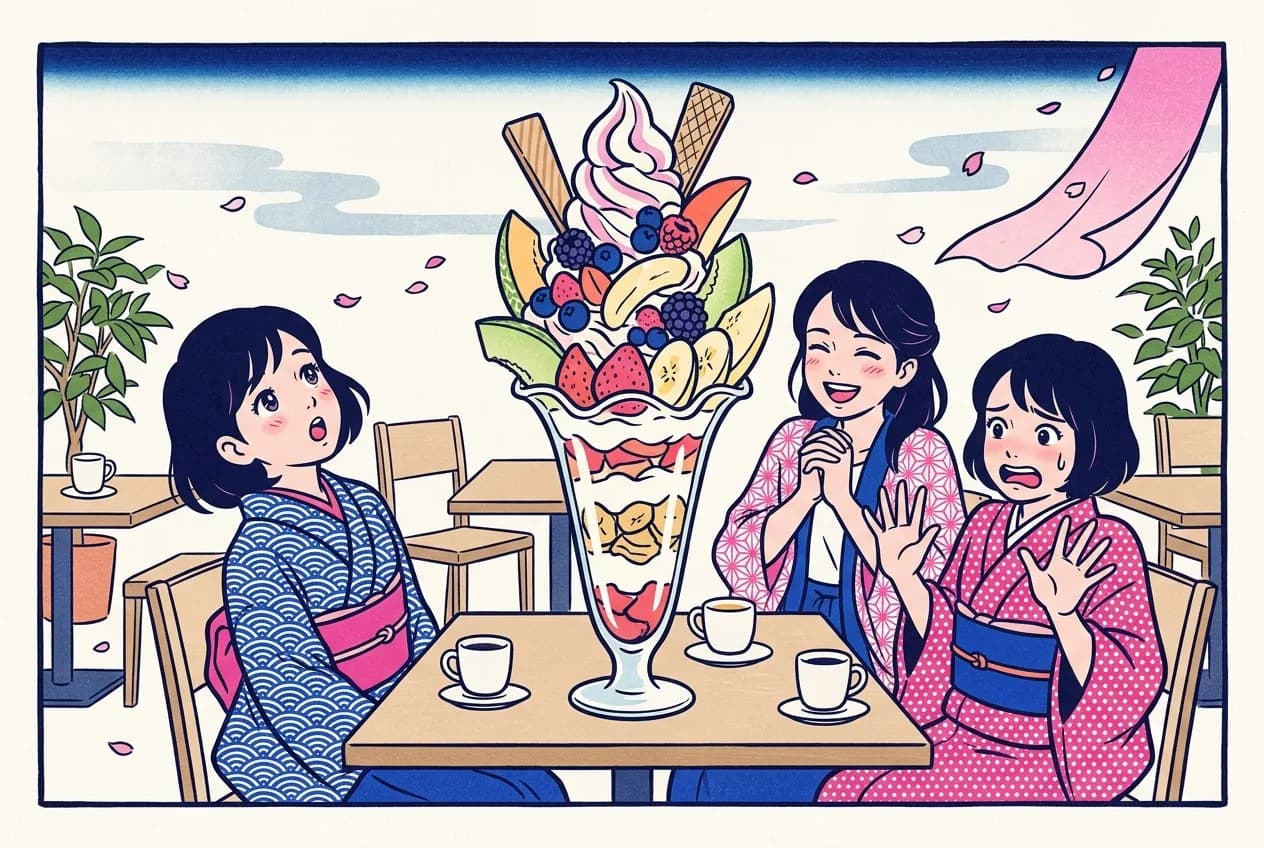
Everyday Japanese slang is a short list, and six words carry most casual conversations. Two of them, やばい (yabai) and めっちゃ (metcha), do half of that work by themselves.
Textbook Japanese gets you understood. Slang gets you invited back.
One rule before the list: slang is friends-and-peers language. It is not rude, but it is register-locked, and it fits an izakaya rather than a job interview. Every word below comes with that asterisk built in.
やばい (yabai) — one word, every emotion
The champion. やばい (yabai) began as “dangerous, about to go wrong,” and it is believed to come from old underworld slang. It still carries that meaning.
The word later flipped, and it also means amazing, delicious, beautiful, huge, terrifying, and “I missed my train.” One word covers the entire emotional range.
So how does anyone understand it? Tone and context do everything.
このラーメン、やばい (konoraamen,yabai) with wide eyes = incredible ramen. 時間やばい (jikan'yabai) while you grab your bag = you're late. Listen for the delivery, not the dictionary.
めっちゃ (metcha) — “super,” exported from Osaka
めっちゃ (metcha) intensifies anything you attach it to: めっちゃおいしい (metchaoishii) (super tasty), めっちゃ楽しい (metchatanoshii) (super fun), めっちゃ人がいる (metchahitogairu) (there are SO many people). It began as Kansai dialect and conquered the whole country — one of the great slang success stories.
In casual speech it replaces とても (totemo) almost completely. If you only upgrade one textbook word after reading this, make it this one.
まじ (maji) / まじで (majide) — “seriously?”
まじで (majide)? with rising intonation is the all-purpose “wait, really?” Flat まじで (majide) is “no, seriously.” As a prefix it intensifies like めっちゃ (metcha): まじでやばい (majideyabai) — genuinely, extremely yabai — is a completely normal sentence among friends.
Fun pedigree: it's said to be a shortening of 真面目 (majime) (serious), with similar clipped forms traced back as far as the Edo period. Today's slang has older roots than it lets on.
微妙 (bimyou) — the polite “meh”
Ask how the movie was and hear 微妙 (bimyou)… — that's “not great, honestly,” delivered gently. The dictionary says “subtle, delicate,” but in conversation it's the standard soft negative: not terrible enough to trash, not good enough to praise.
It is useful for you too. 微妙かも (bimyoukamo) (“mm, not sure it's great”) declines an opinion without attacking anyone's taste.
神 (kami) — god-tier
神 (kami) means god — and in slang, “absolutely top-tier.” A perfect app is a 神アプリ (kamiapuri), flawless customer service is 神対応 (kamitaiou), and a friend who brings snacks unasked is 神 (kami).
It's praise inflation at its finest, and everyone understands it instantly. Use it when something genuinely delights you, and watch the conversation light up.
エモい (emoi) — moving, nostalgic, gently devastating
エモい (emoi) is built from English “emotional” plus the adjective ending 〜い (~i). It describes things that move you: a sunset, an old song, photos from a trip.
It is the newest word on this list, and it skews youngest. Using it well shows real cultural fluency.
Slang ages fast — the 死語 (shigo) warning
Slang ages fast, and words that defined one generation become 死語 (shigo) (“dead words”) for the next. The classic example is ナウい (naui), “now-y” in the sense of trendy. It was fashionable decades ago, and today it earns an affectionate laugh.
This guide teaches only words in current circulation. Be careful with any slang list that promises hundreds of entries. Internet-only abbreviations follow different rules, and they are not covered here.
Cheat sheet: the working six (+2)
For やばい (yabai), tone decides which meaning you hear. Pin this one:
| Word | Means | Register note |
|---|---|---|
| やばい (yabai) | MeansAmazing, terrible, or urgent, by tone | Register noteFriends only, across generations |
| めっちゃ (metcha) | MeansSuper, very | Register noteCasual replacement for とても (totemo) |
| まじで (majide) | MeansSeriously? / no, seriously | Register noteReaction word, any casual setting |
| 微妙 (bimyou) | MeansMeh — soft negative | Register noteSafe even in semi-polite talk |
| 神 (kami) | MeansGod-tier, the best | Register notePraise inflation — friends and SNS |
| エモい (emoi) | MeansMoving, nostalgic | Register noteYoungest-skewing word here |
| ウケる (ukeru) | MeansThat's hilarious | Register noteReaction to something funny |
| だるい (darui) | MeansSluggish, can't-be-bothered | Register noteComplaining with friends |
Where slang is safe (and where it isn't)
The rule is register, not politeness: these words aren't rude, they're casual. Friends, classmates, izakaya, and social media are all fine. Job interviews, emails to your professor, and first meetings with someone senior take standard Japanese instead.
With someone senior, use やばい (yabai) only after they use it first.
Best practice order: learn to catch these words first (they're everywhere), then use them with friends. Then enjoy the moment someone tells you your Japanese sounds めっちゃ (metcha) natural — that is what getting invited back sounds like.
Test yourself — take the free “Slang You'll Actually Hear” quiz