The Unspoken Rules of Japan: Ranked by What Really Matters
Published 2026-07-29 · Updated 2026-09-03
You will break an etiquette rule in Japan, and everyone does. The fix is a small bow and すみません (sumimasen).
Effort and recovery matter far more than perfection. Japanese people are famously generous to visitors who are visibly trying.
This is a ranking rather than a list of fears. It covers which rules genuinely matter, which are nice to know, and which ones tourists worry about too much.
The logic underneath: inside vs. outside, and shared quiet
Most Japanese etiquette comes down to two ideas. The first is the boundary between inside and outside. Shoes come off at the 玄関 (genkan) because the raised floor marks where “outside” physically ends.
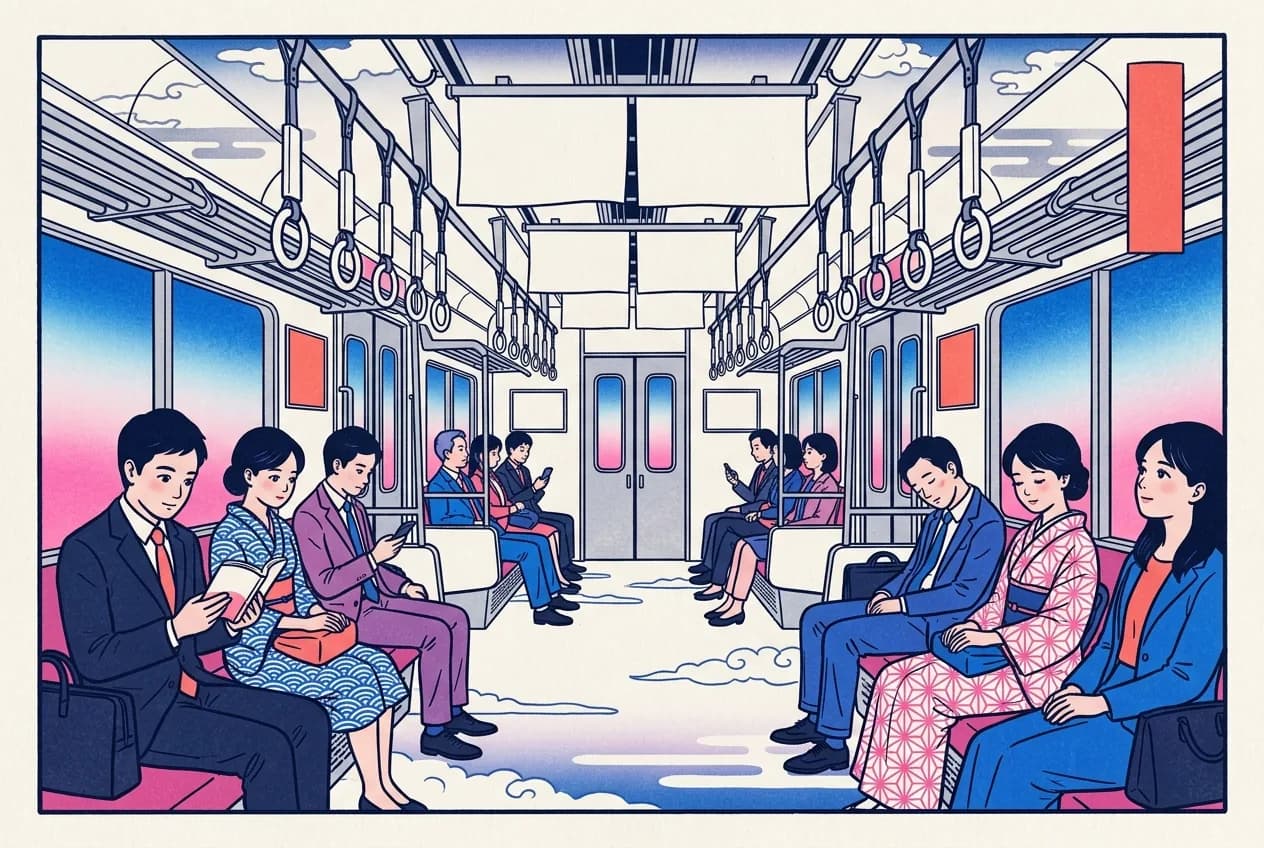
The second is that public space is shared, and a train car is a room everyone borrows together. Phone calls are therefore out, because your voice reaches other people. Silent scrolling is fine.
Once you have those two ideas, you can work out most rules on the spot instead of memorizing them.
Tier 1 — these genuinely matter
Shoes off at homes, temples, and any tatami floor. Watch for the genkan step, and follow whoever went in before you.
No phone calls on trains, and keep conversations low. Line up exactly where the platform markings say. Those neat lines are not decorative, and everyone honors them.
Two chopstick taboos have a story behind them. Never stand chopsticks upright in rice, 立て箸 (tatebashi), and never pass food chopstick-to-chopstick, 箸渡し (hashiwatashi).
Both mirror Japanese funeral rites. Rice with standing chopsticks is offered to the dead, and cremated bones are passed between chopsticks. These two draw genuinely uncomfortable reactions, not mild surprise.
Tier 2 — nice to know
Stand on one side of the escalator, left in Tokyo and right in Osaka, a rivalry the whole country enjoys. At an onsen, wash yourself thoroughly before you get into the shared bath, which is for soaking rather than cleaning.
Eating while walking depends on context rather than being forbidden. It is fine at a festival and frowned on in a quiet shopping street. When in doubt, stand still, eat, then walk.
Tier 3 — tourists worry too much
Slurping noodles is not only allowed. It is the natural way to eat ramen and soba. Tipping is not expected anywhere, and staff will chase you down the street to return the money you “forgot.”
Nobody expects you to bow correctly, use keigo, or know every rule. A friendly nod covers nearly all the social situations you will meet.
The ranking at a glance
◎ = really matters · ○ = good manners · △ = relax
| Rule | Weight | If you slip |
|---|---|---|
| Shoes off at the 玄関 (genkan) / tatami | Weight◎ | If you slipStep back, remove, すみません (sumimasen) + smile |
| No phone calls on trains | Weight◎ | If you slip“後でかけ直します (atodekakenaoshimasu)” and hang up |
| Chopsticks: no 立て箸 (tatebashi), no passing food | Weight◎ | If you slipLay them on the rest, continue normally |
| Line up at platform markings | Weight◎ | If you slipSlide to the back with a nod |
| Escalator side: Tokyo left, Osaka right | Weight○ | If you slipStep aside |
| Wash before the onsen bath | Weight○ | If you slipFollow the kind gesture from staff |
| Eating while walking | Weight△ | If you slipStand still and finish — done |
| Slurping noodles | Weight△ (it's fine!) | If you slipNothing to fix |
| Tipping | Weight△ (don't) | If you slipAccept your change gracefully |
The recovery toolkit
One phrase and one gesture cover it: すみません (sumimasen) with a small bow, a nod of about 15 degrees, the casual 会釈 (eshaku). It acknowledges, apologizes, and closes the moment at once.
Deliver it with a smile and almost any etiquette slip turns into a warm interaction. You will break a rule somewhere, and you already know the fix.